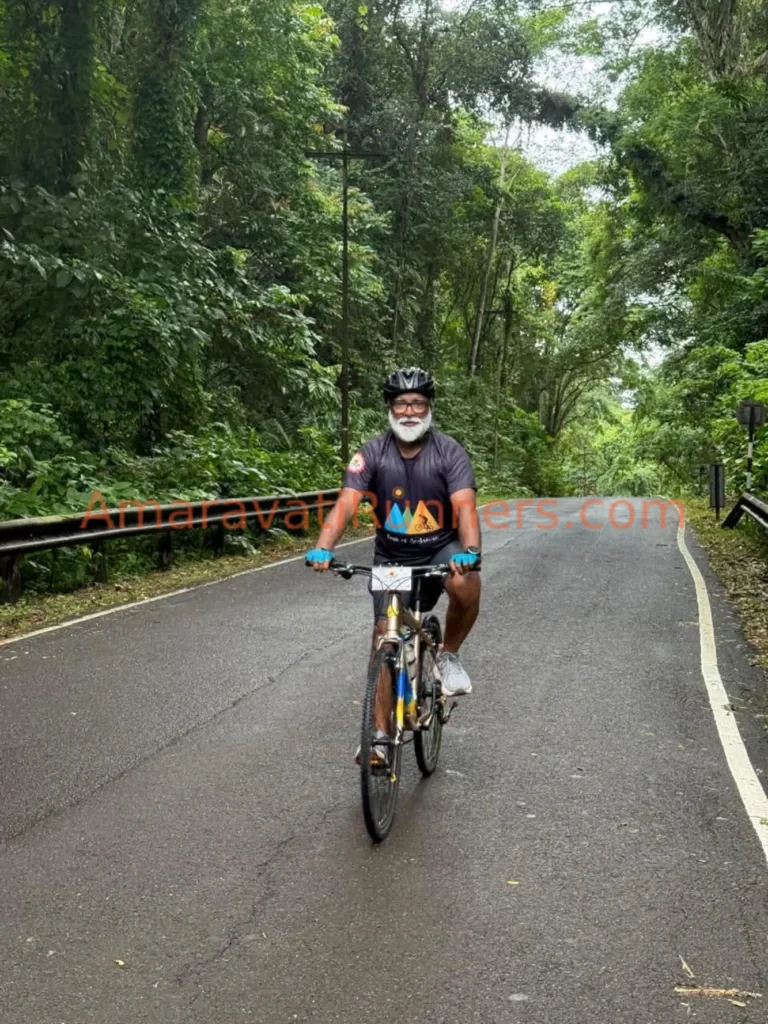
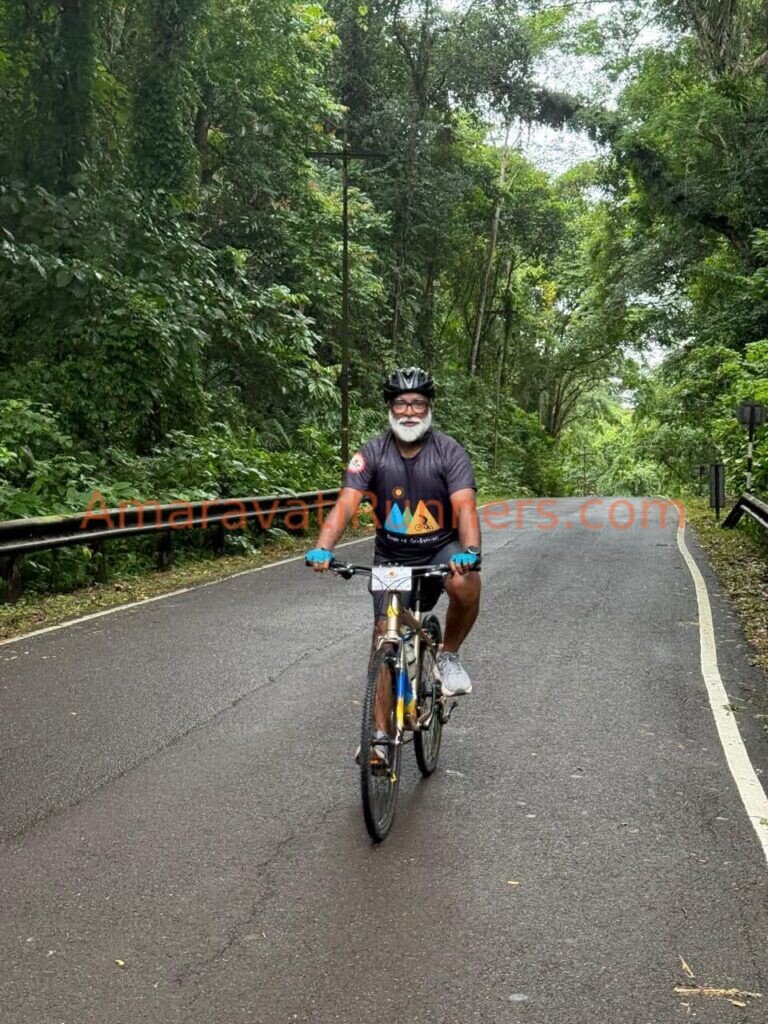
Pedalling Through the Andaman Islands: A Journey of Dreams, Discovery and Endurance
Editorial Introduction
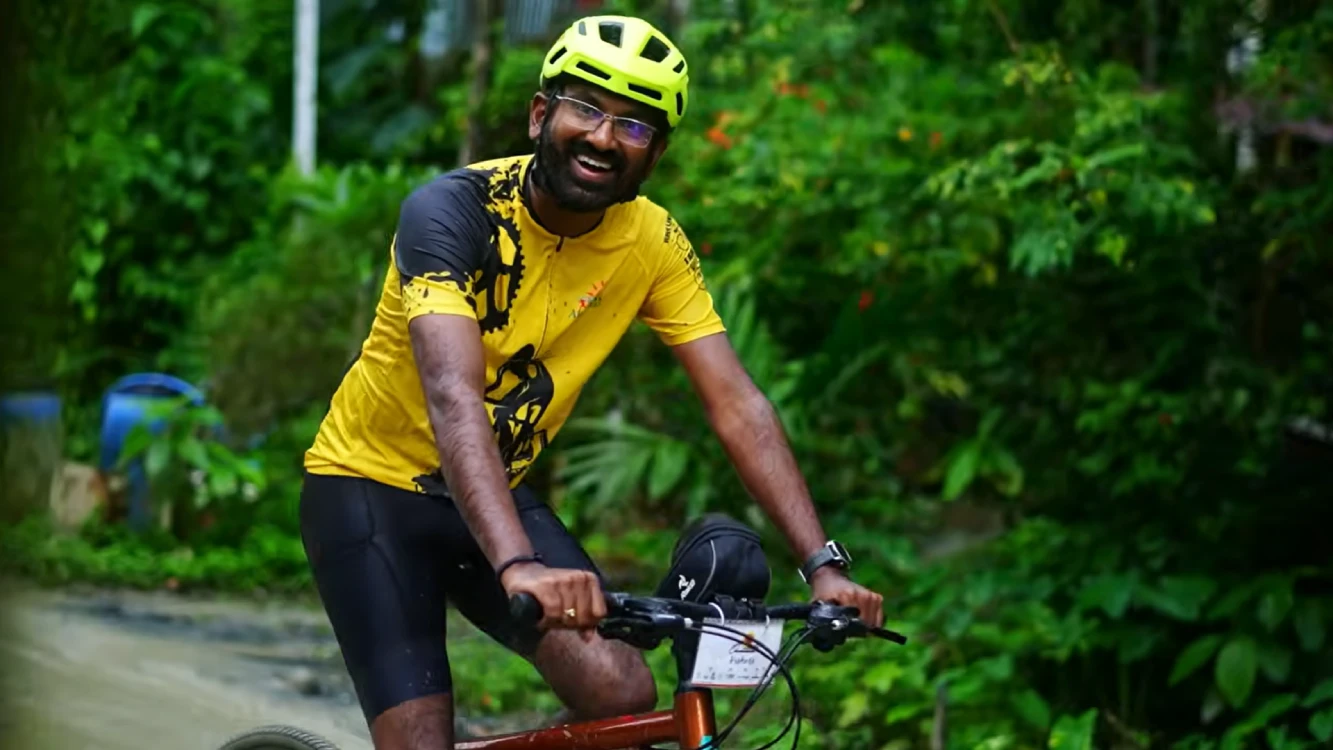
From Vijayawada to the islands of Andaman, an eagerly awaited cycling expedition became a journey of endurance, discovery, cultural encounters and personal reflection. Amaravati Runners’ organizing member Ramesh Ravi shares his seven-day experience in his own words.
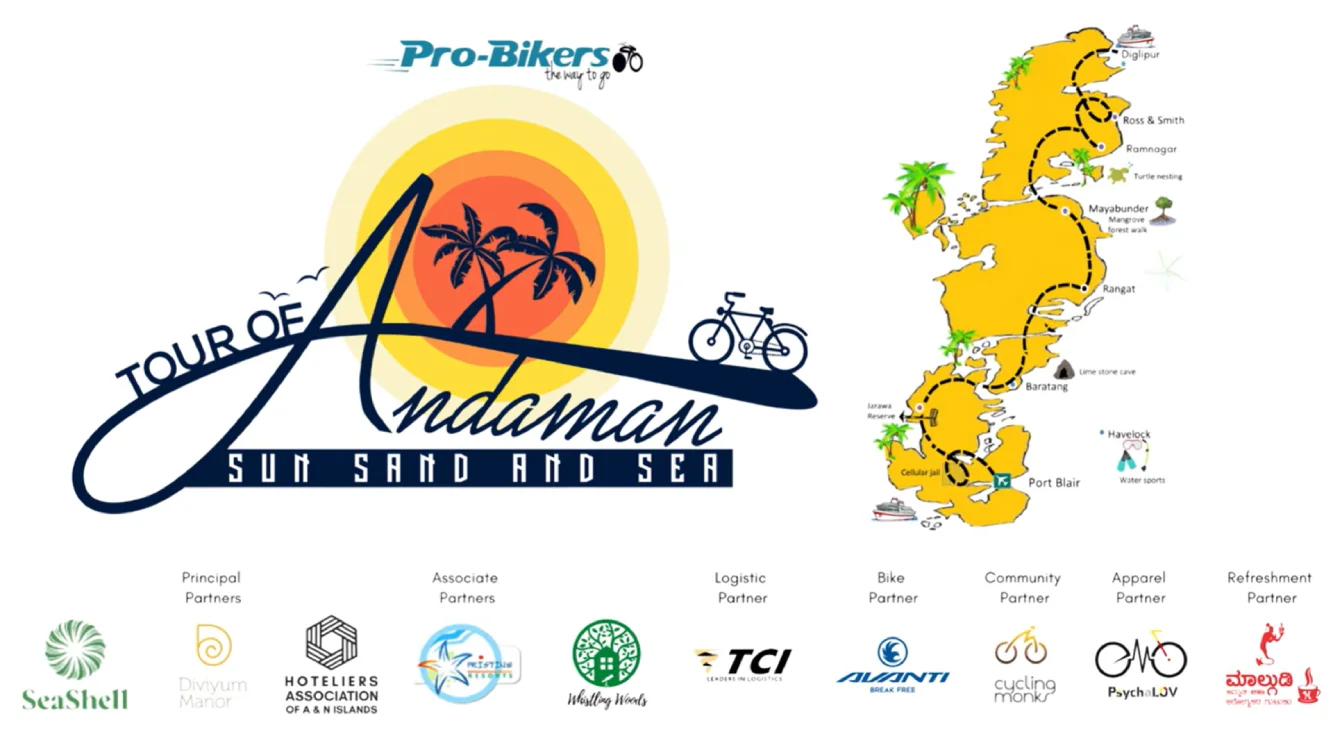
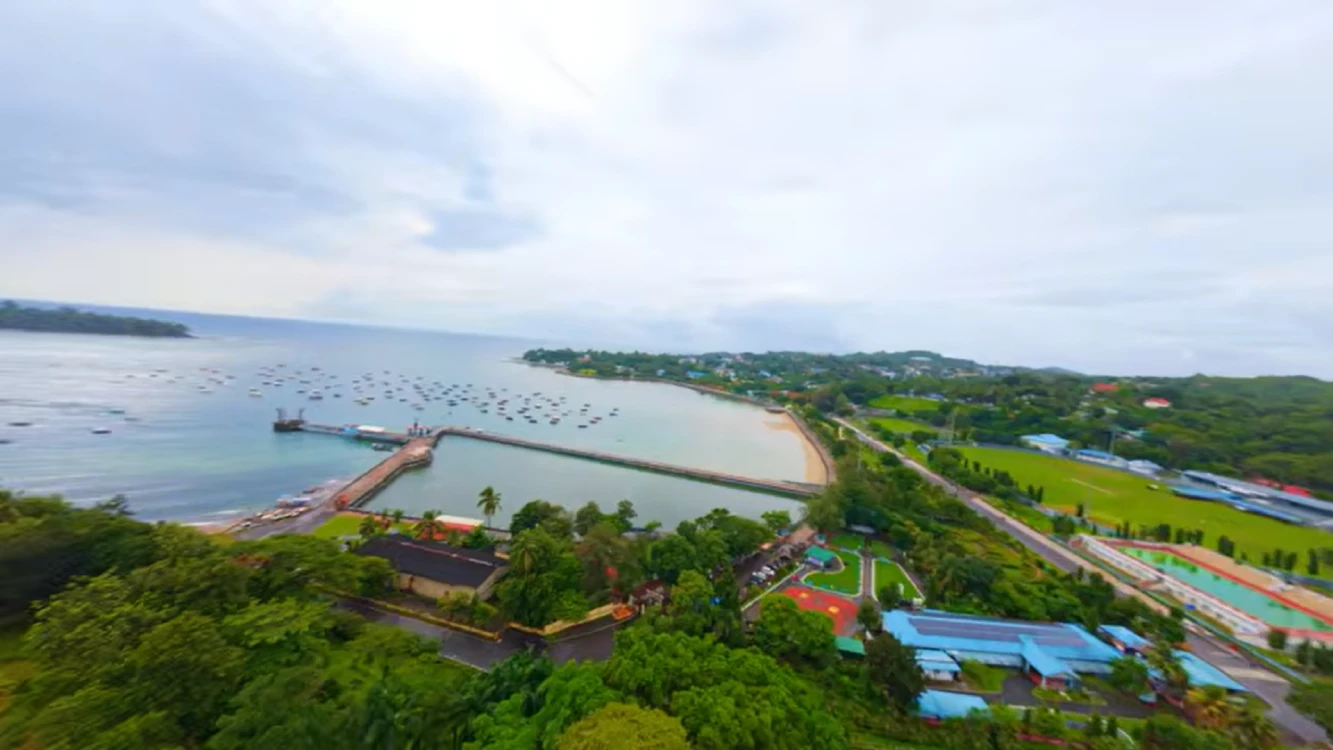
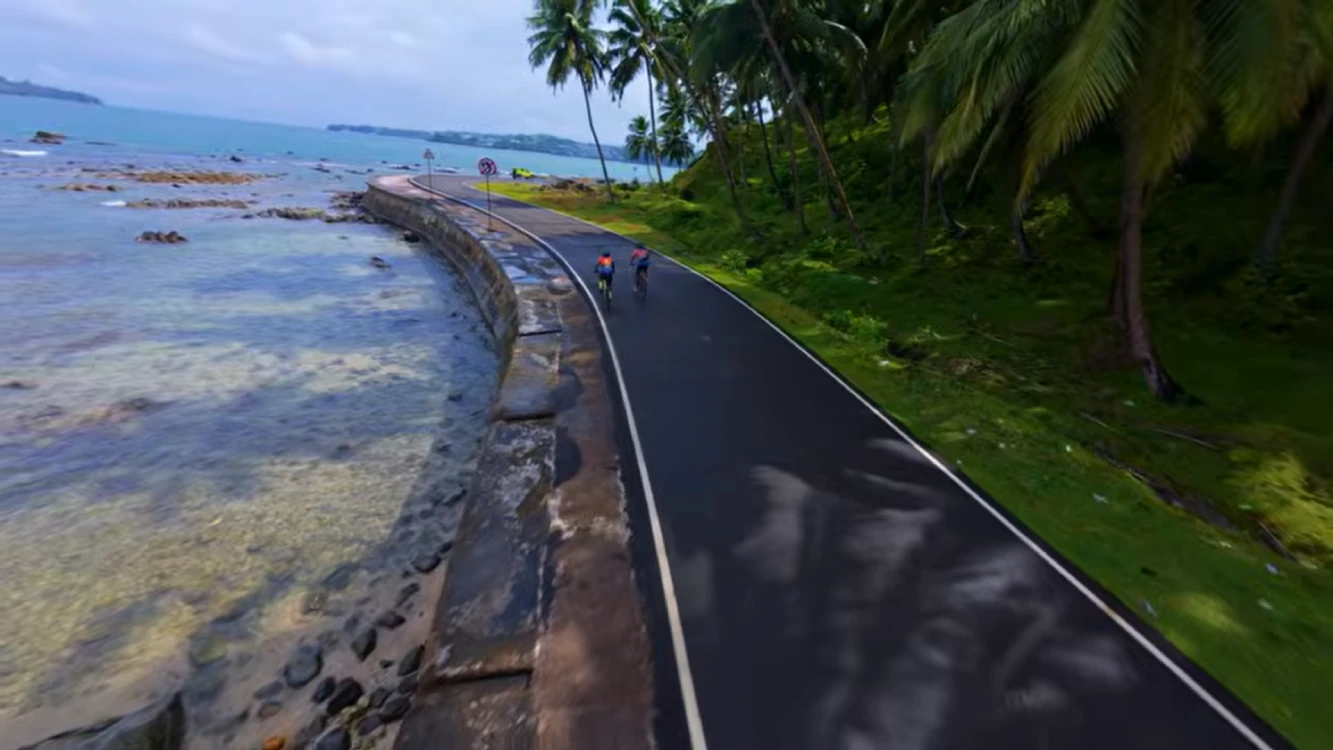
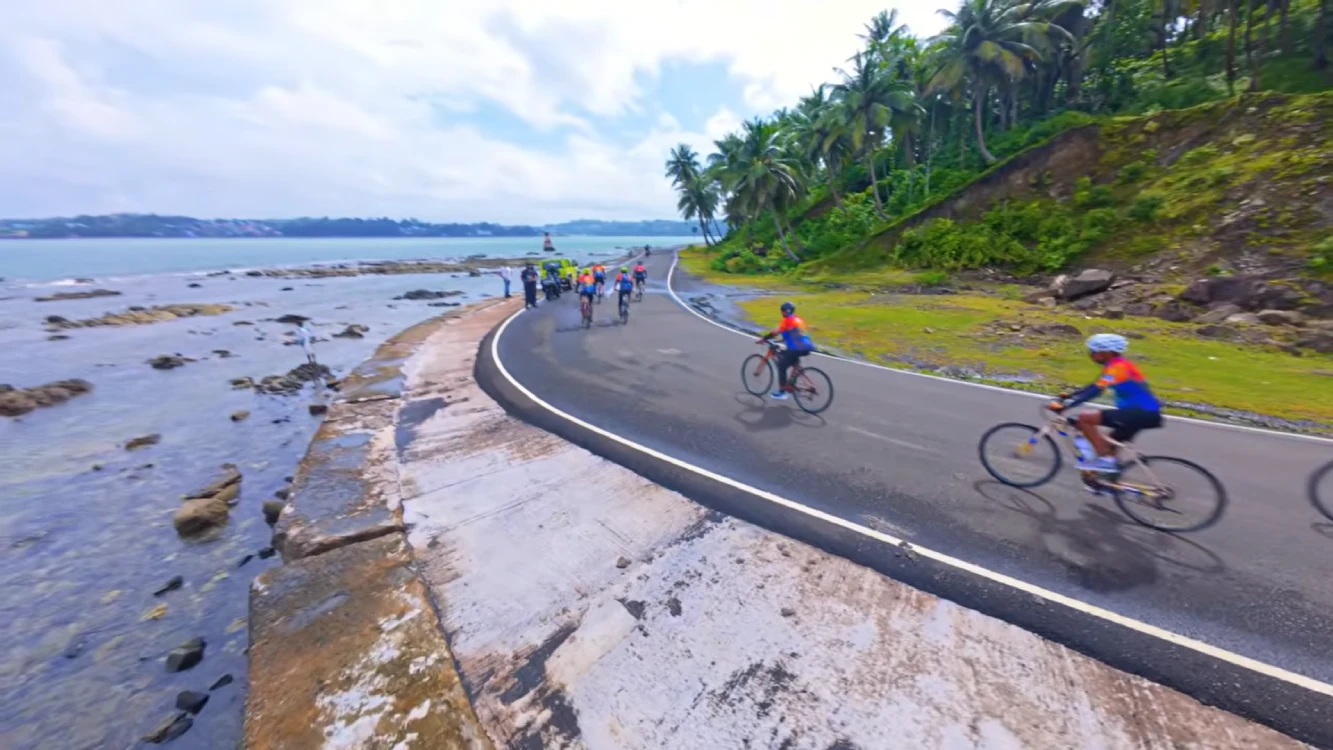
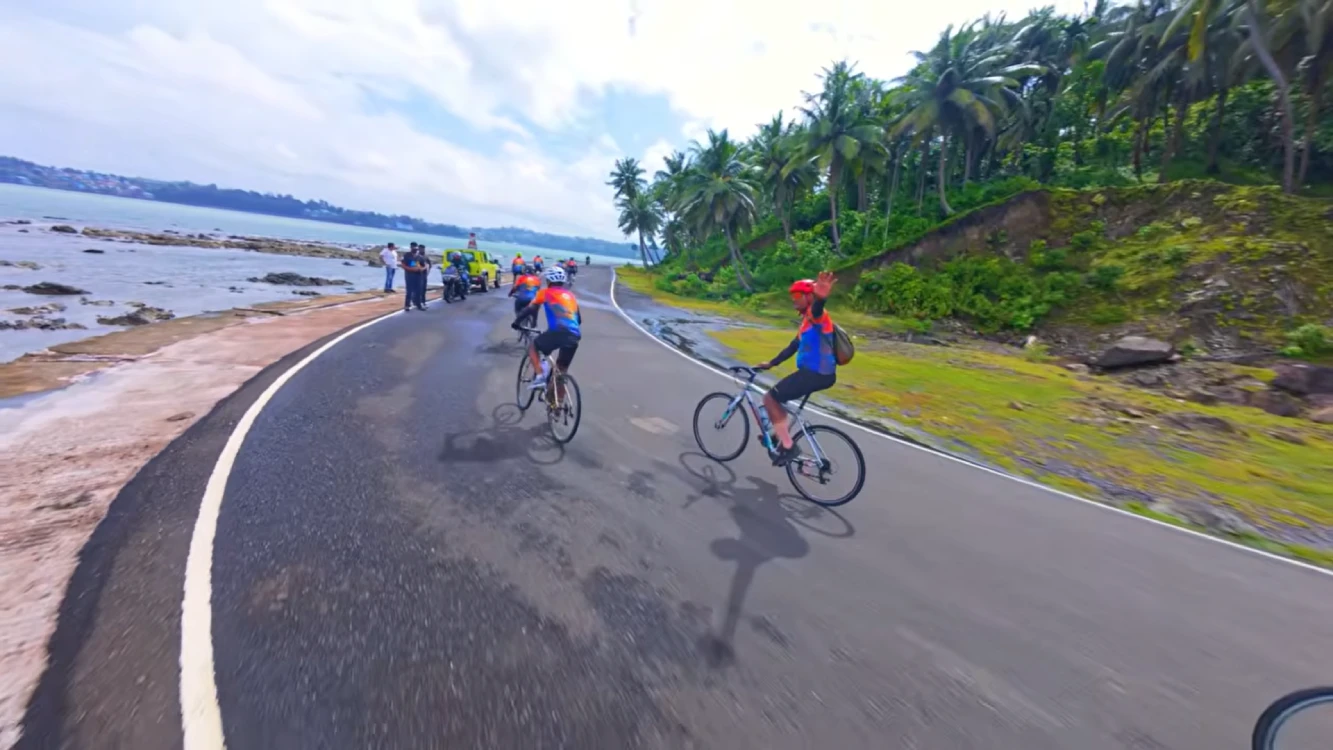
Over seven days, the expedition covered approximately 300 km by bicycle, taking the riders through tropical rainforests, coastal roads, remote settlements and the diverse landscapes of the Andaman Islands.
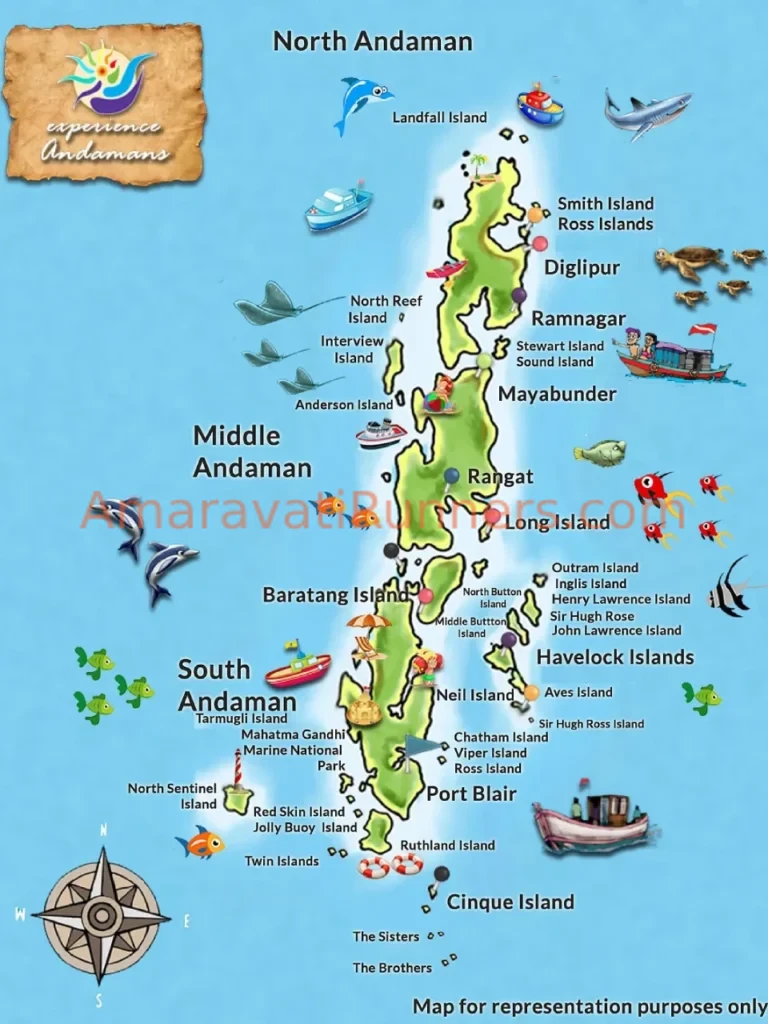
The dream of cycling in the Andamans
Some journeys are planned for adventure, some for exploration, and a few to fulfil dreams that have been waiting patiently for years. My cycling expedition through the Andaman Islands belongs to the third category.
It had been a long-pending wish of mine to explore the Andaman and Nicobar Islands on two wheels. There is something uniquely beautiful about discovering a destination on a bicycle. Unlike travelling in a car or bus, cycling allows you to experience the landscape at your own pace, feel the breeze, observe the smallest details, and connect with the people and places around you.
My heartfelt thanks to Dhiraj from Parikrama, Bengaluru, for organising this wonderful expedition and making this long-cherished dream a reality. The moment I learnt about the tour, I registered myself, almost seven months in advance. From that day onwards, I had been eagerly waiting for the adventure to begin.
Day 1: The Dream Begins
19th Sep 2026
Finally, the much-awaited day has arrived!
I boarded a flight from Vijayawada along with four of my teammates.
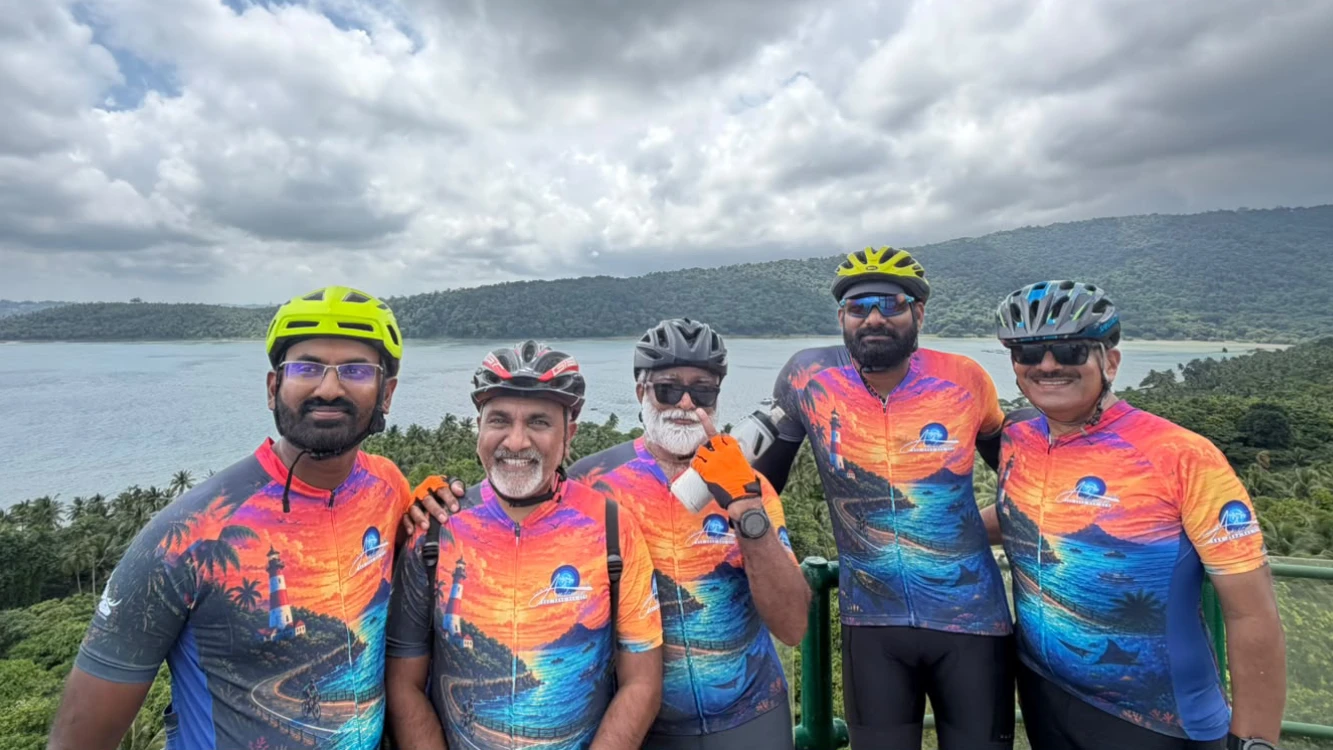
L to R: Kishore K, Vamsidhar P, Ramesh R, Nishikanth N, and Srinivas G.
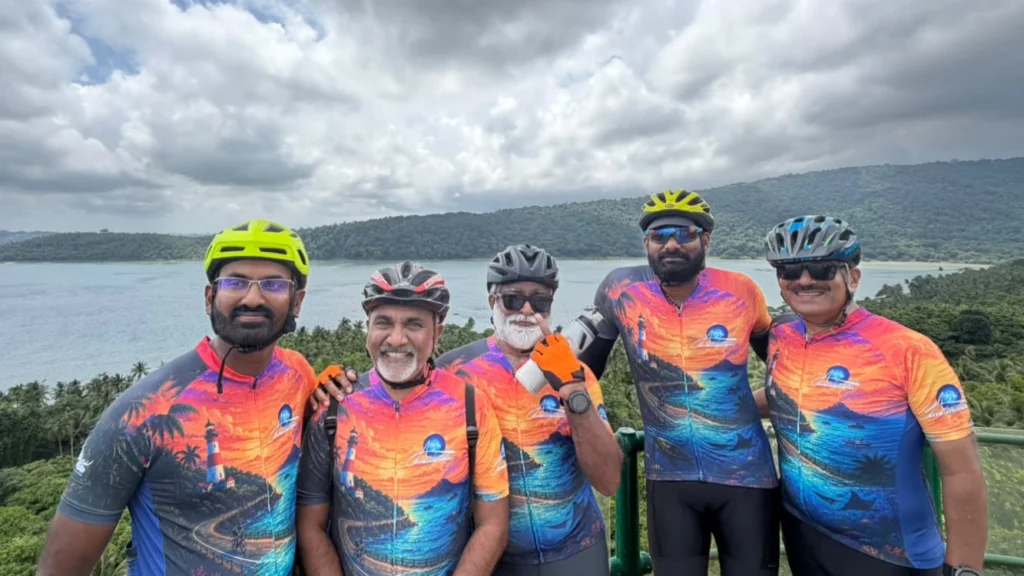
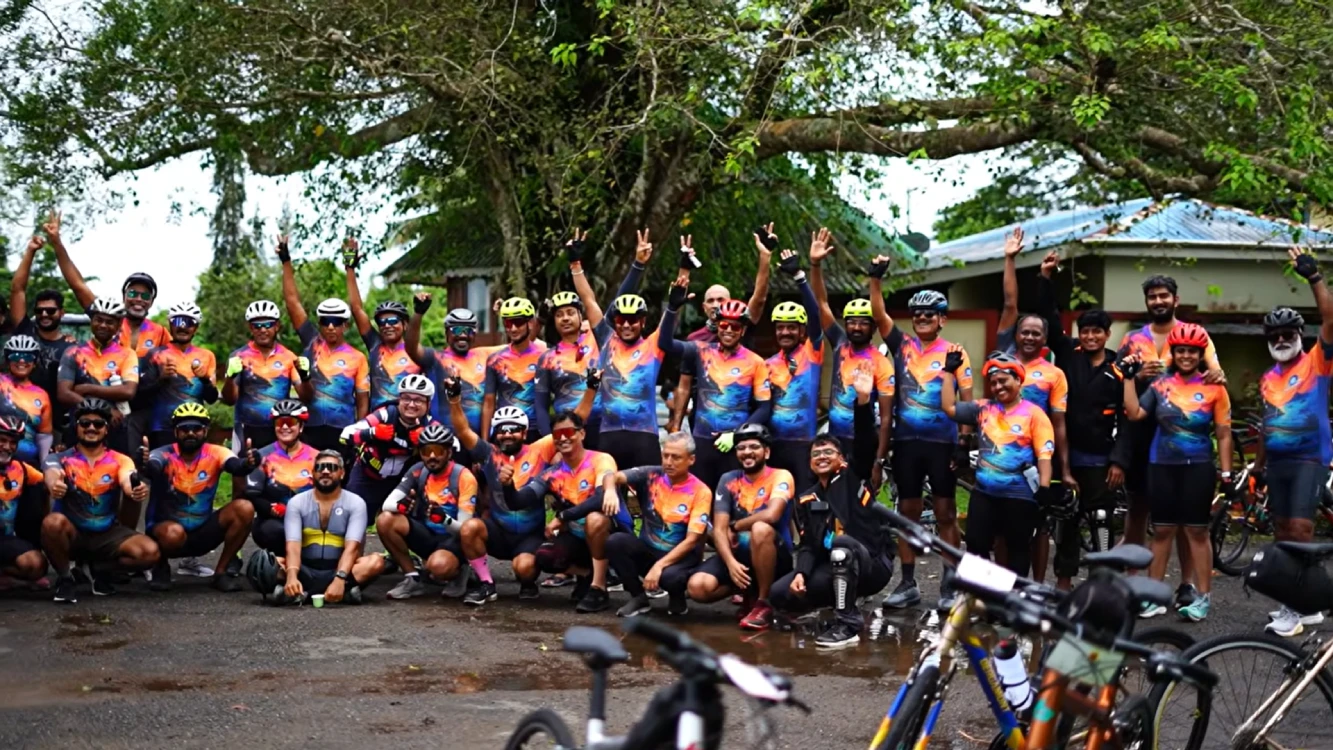
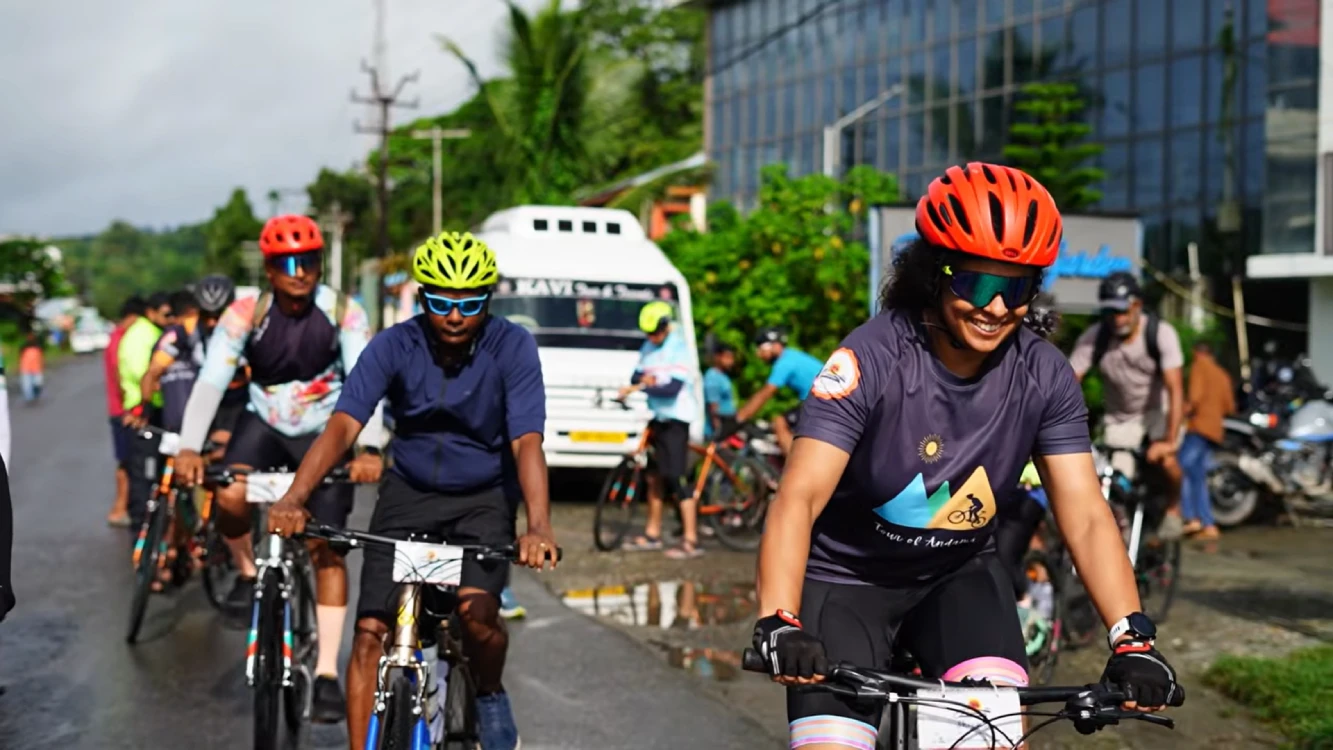
After reaching Bengaluru, we joined a larger group of around 25 enthusiastic cyclists, all united by a shared passion for cycling, adventure and exploration.
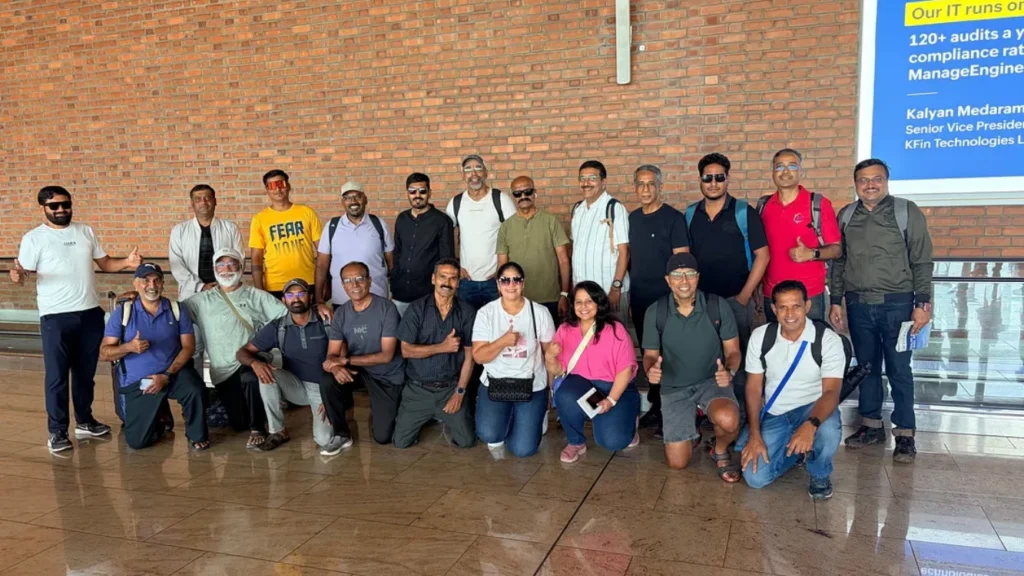
A Young Mind and an Age-Old Body
Once again, I felt privileged to be carrying an age-old body with a young mind. At this stage of life, I believe age may limit the body. But it need not put an expiry date on our dreams. The excitement of embarking on a new adventure was no less than that of a youngster setting out to explore the world for the first time.
Welcome to the Andaman Islands
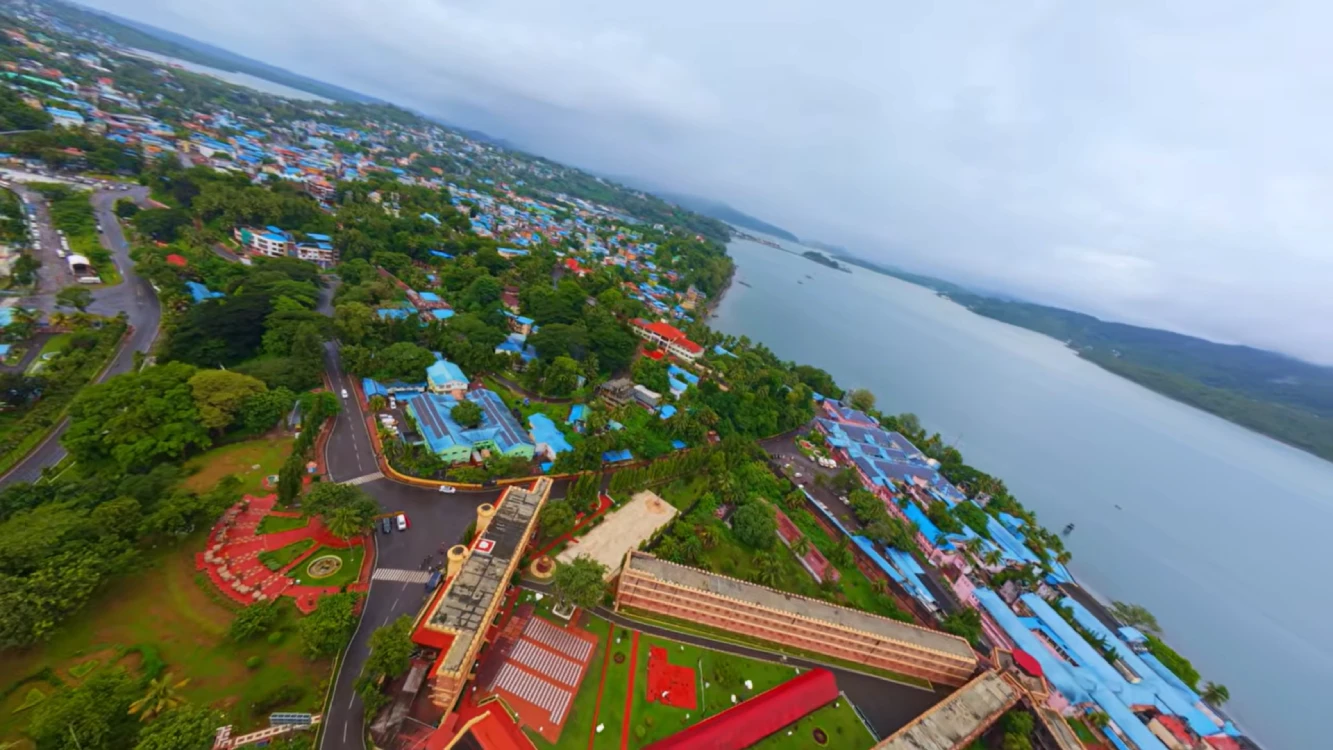
Our excitement reached another level when we landed at Veer Savarkar International Airport in Port Blair, now officially known as Sri Vijaya Puram. Arriving here was special. We were about to experience a part of India that is geographically distant, culturally distinct and naturally extraordinary.
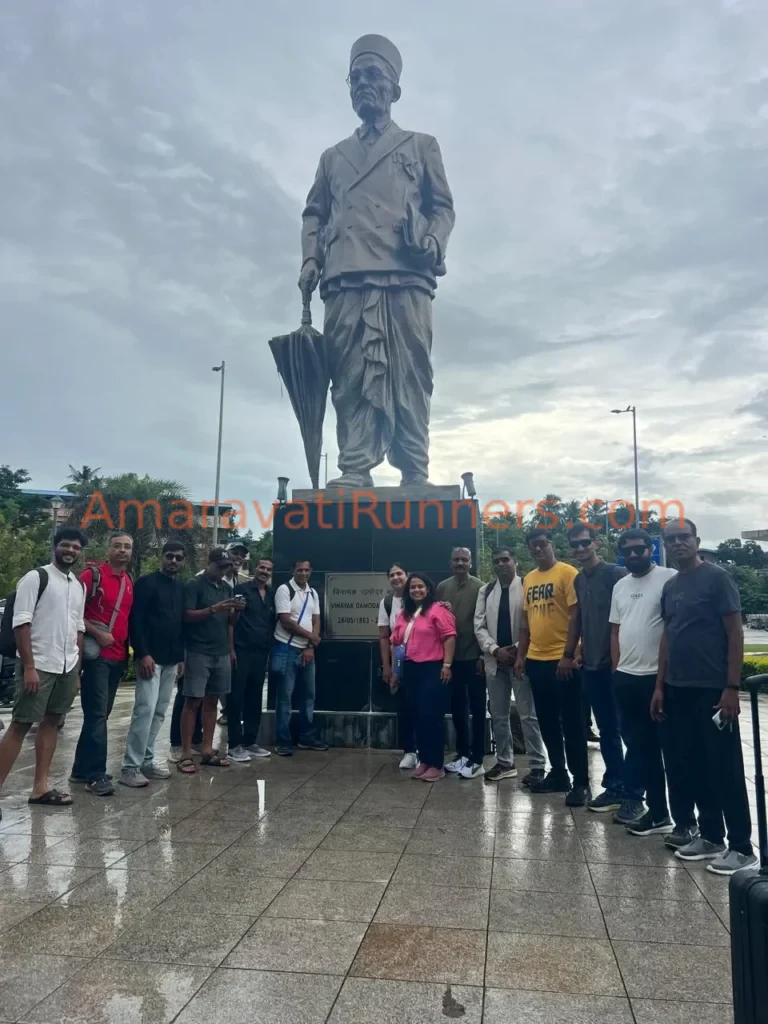
The Andaman Islands are known for their turquoise waters, tropical forests, coral reefs, and fascinating history. They are also home to indigenous communities whose lives, traditions, and relationship with nature offer a perspective very different from our own. I knew this journey would be about much more than covering kilometres on a bicycle.
Preparation, Briefing and Camaraderie
After reaching our hotel, we settled into our rooms and took some time to unwind after the day’s travel. In the evening, we attended a detailed briefing covering the cycling routes, safety protocols, support arrangements and other essential aspects of the expedition. In a place where weather, terrain, and island logistics can affect every day’s plans, preparation and teamwork matter as much as physical fitness.
The briefing was followed by dinner, giving everyone a chance to interact, share experiences, and build camaraderie. Although we came from different places and backgrounds, our common love for cycling had already brought us together.
A Dream Finally Unfolds
As the day came to an end, I felt a quiet sense of fulfilment. A dream that had occupied my thoughts for seven months had finally begun to unfold.
The real adventure was waiting for us beyond the hotel doors — on winding island roads, through tropical greenery, alongside stretches of blue ocean and into landscapes that promised countless discoveries.
I went to bed with anticipation, gratitude, and a heart full of excitement.
The journey had begun, and I was ready to discover the Andamans one pedal stroke at a time.
Day 2: Port Blair to Mount Harriet and North Bay | Climbing Through the Rain
Distance: 53 km | Elevation gain: Approximately 850 metres
20th Sep 2026
Getting Ready for the First Ride
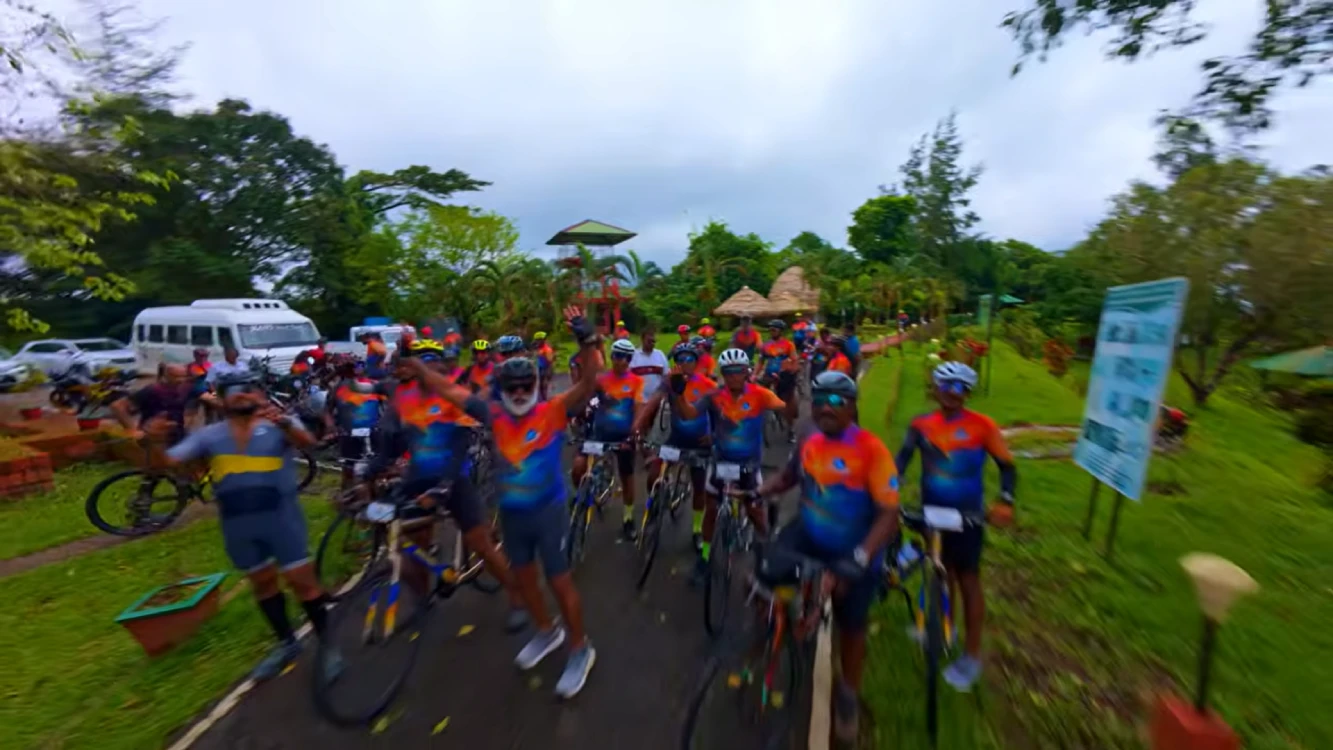
The tour organisers had arranged new bicycles for all the participants. Everyone selected a bike that suited their height and made the necessary adjustments, fitting their lights, bags and water bottles. Soon, the group was ready to hit the road.
There is always a special thrill in starting a cycling expedition in unfamiliar territory. Every turn brings a new view, every climb presents a challenge, and every kilometre adds another experience to the journey.
A Glimpse of History Before the Climb
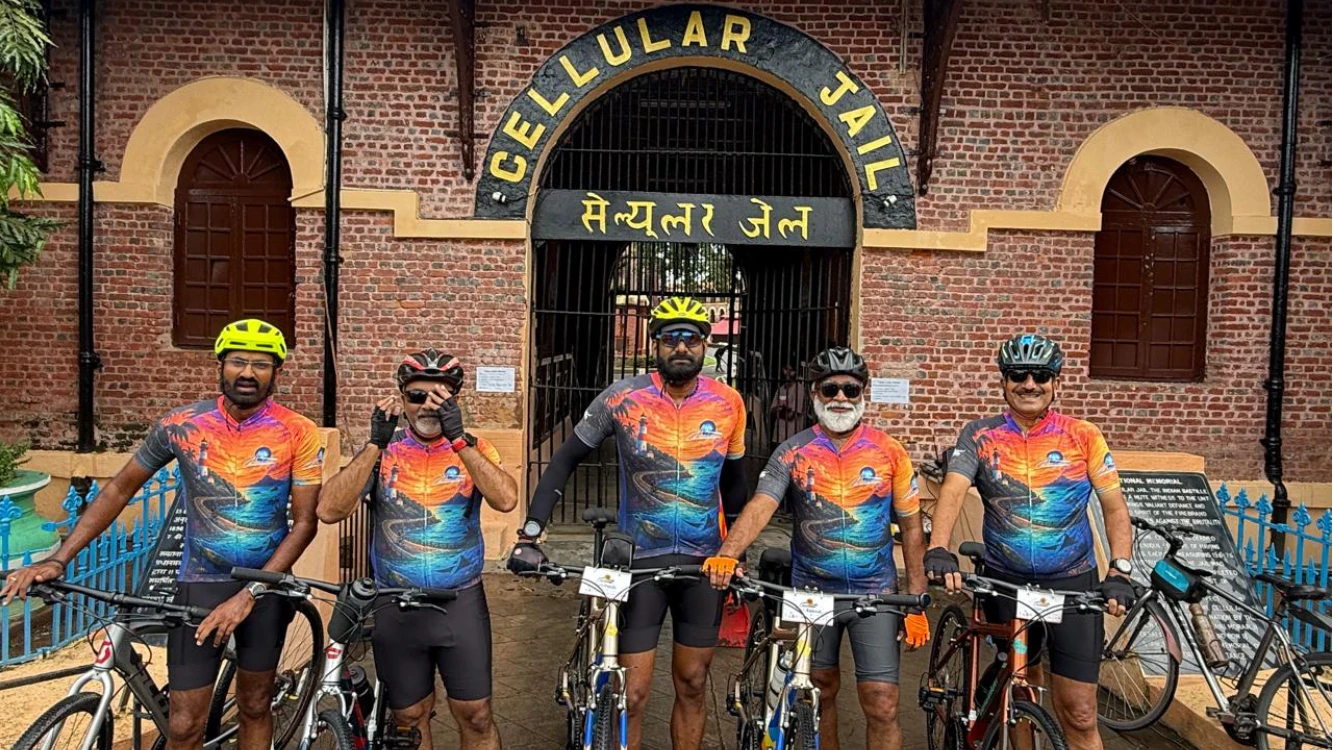
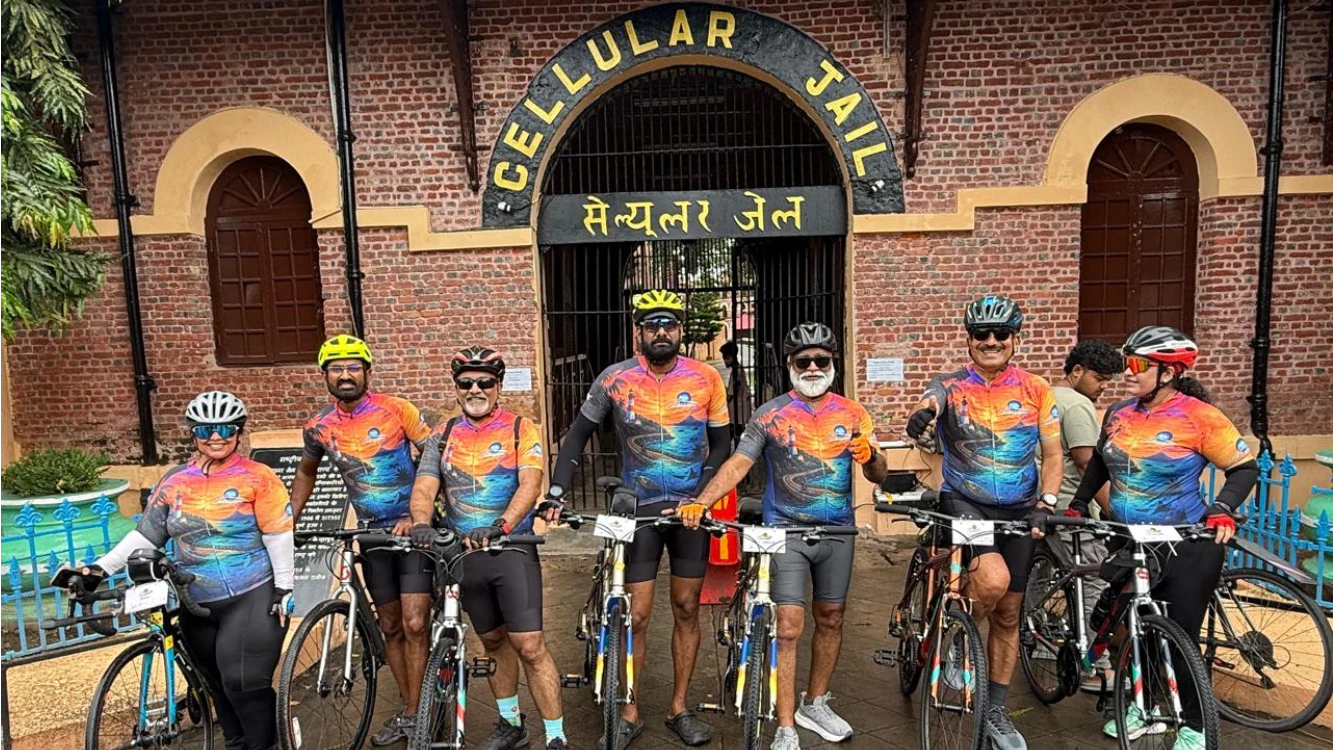
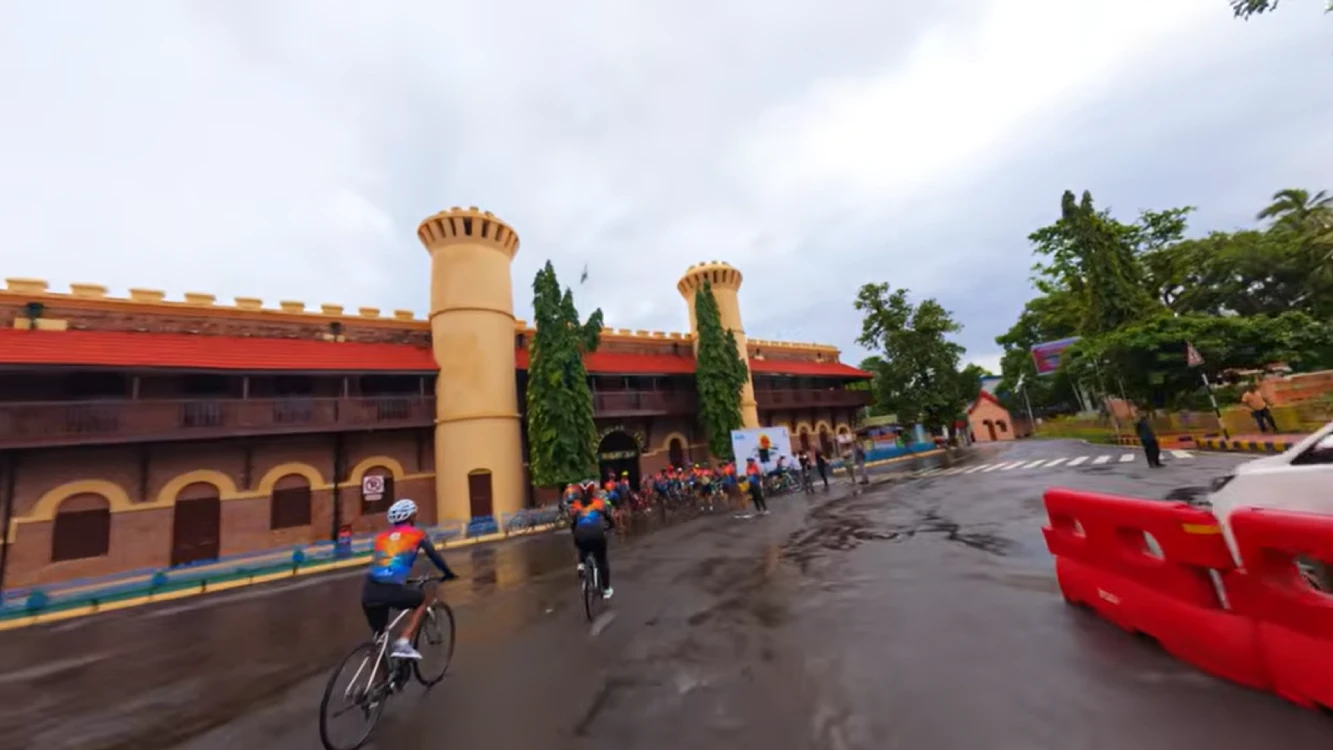
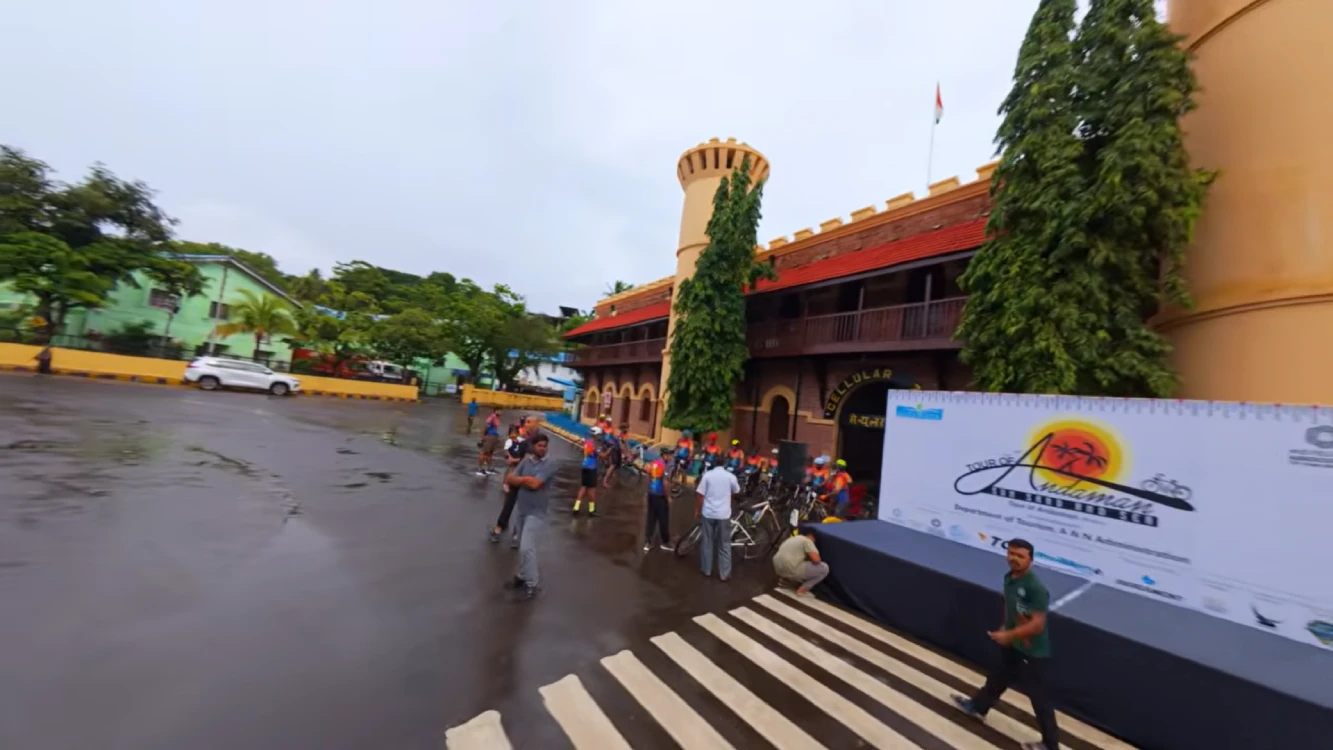
Our route took us past the iconic Cellular Jail, one of India’s most significant historical landmarks. Also known as Kala Pani, this colonial-era prison stands as a powerful reminder of the suffering and sacrifices endured by India’s freedom fighters.
Looking at this monument before beginning our ride was a sobering experience. While we were free to explore the islands in pursuit of adventure, many who came before us had been brought here against their will, separated from their families and subjected to immense hardship. It was a reminder that the freedom we enjoy today came at a tremendous cost.
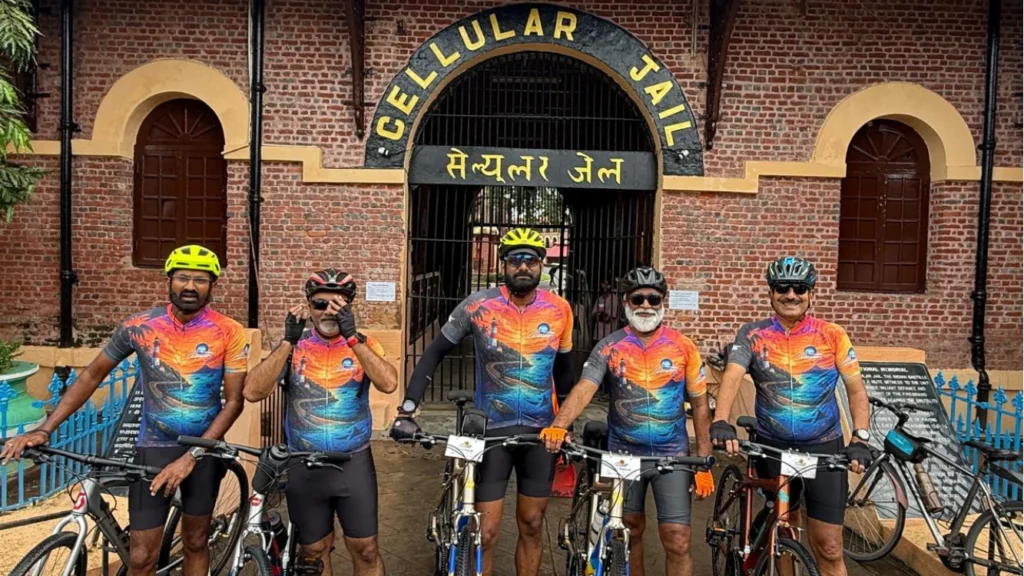
From this historic landmark, we continued towards Mount Harriet, leaving behind the bustle of Port Blair and heading into greener, more challenging terrain.
Mount Harriet — Where the Real Test Began
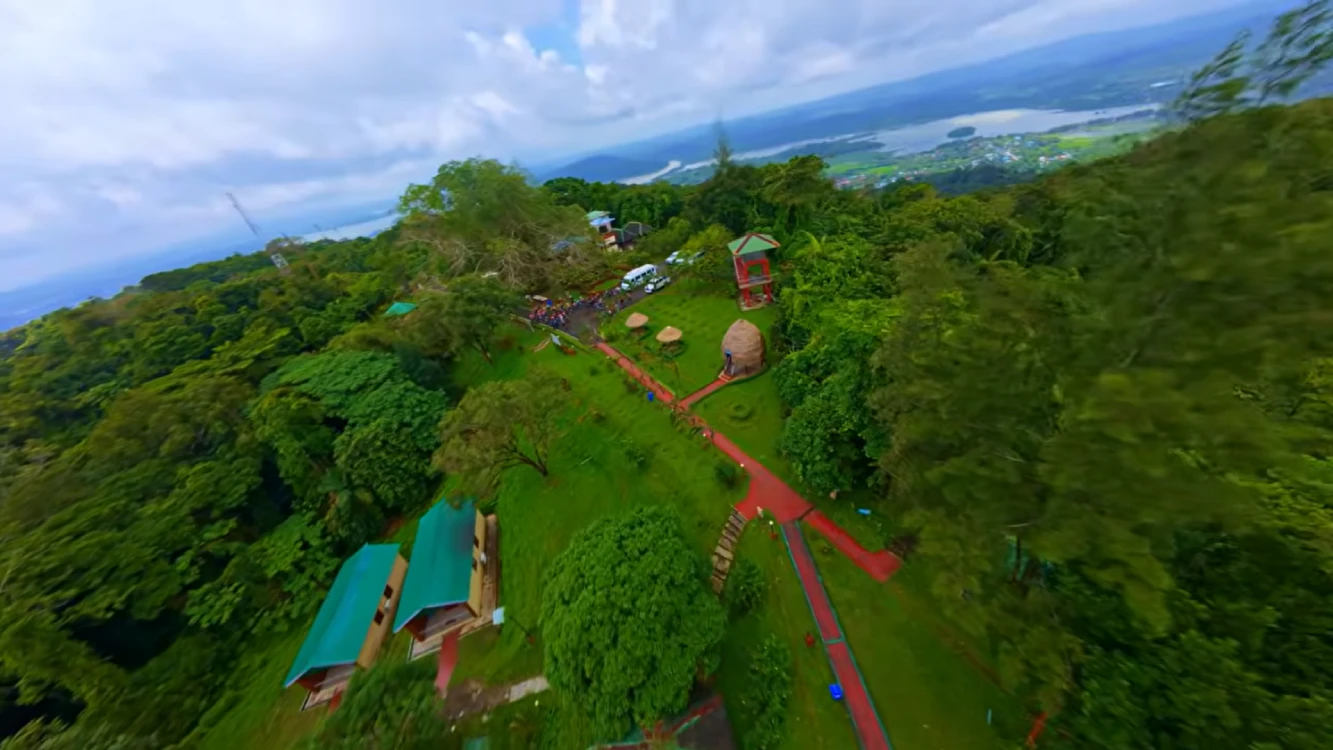
Mount Harriet was the major challenge of the day. Rising to approximately 383 metres, it is the second-highest peak in the South Andaman group of islands. The area is now known as Mount Manipur National Park, a name that commemorates the contribution of Manipuri freedom fighters who were imprisoned here during British rule.
The climb was demanding, with gradients that tested our stamina, leg strength and determination. The combination of steep stretches, high humidity and wet road conditions made the ascent even more challenging.
Almost every rider experienced the difficulty of the climb. Even those who were physically fit had to manage their pace carefully, choosing when to push harder and when to conserve energy.
Every pedal stroke took us a little closer to the top. The lush tropical vegetation, the fresh scent of rain-soaked greenery and the occasional glimpses of the surrounding landscape made the effort worthwhile.
Ferry Crossing and the Journey to North Bay
Our adventure continued with a ferry crossing, adding another dimension to the expedition. In the Andamans, the sea is not merely a scenic backdrop; it is an essential part of everyday transport and island exploration.
Moving between land and water, with bicycles and fellow riders as our companions, made the journey feel even more adventurous. It was a reminder that cycling in an island territory is very different from riding on the mainland. Here, roads, ferries and weather all become part of the experience.
We continued towards North Bay, famous for its picturesque coastline, marine life and historic lighthouse. The combination of cycling and ferry travel allowed us to appreciate the islands from different perspectives.
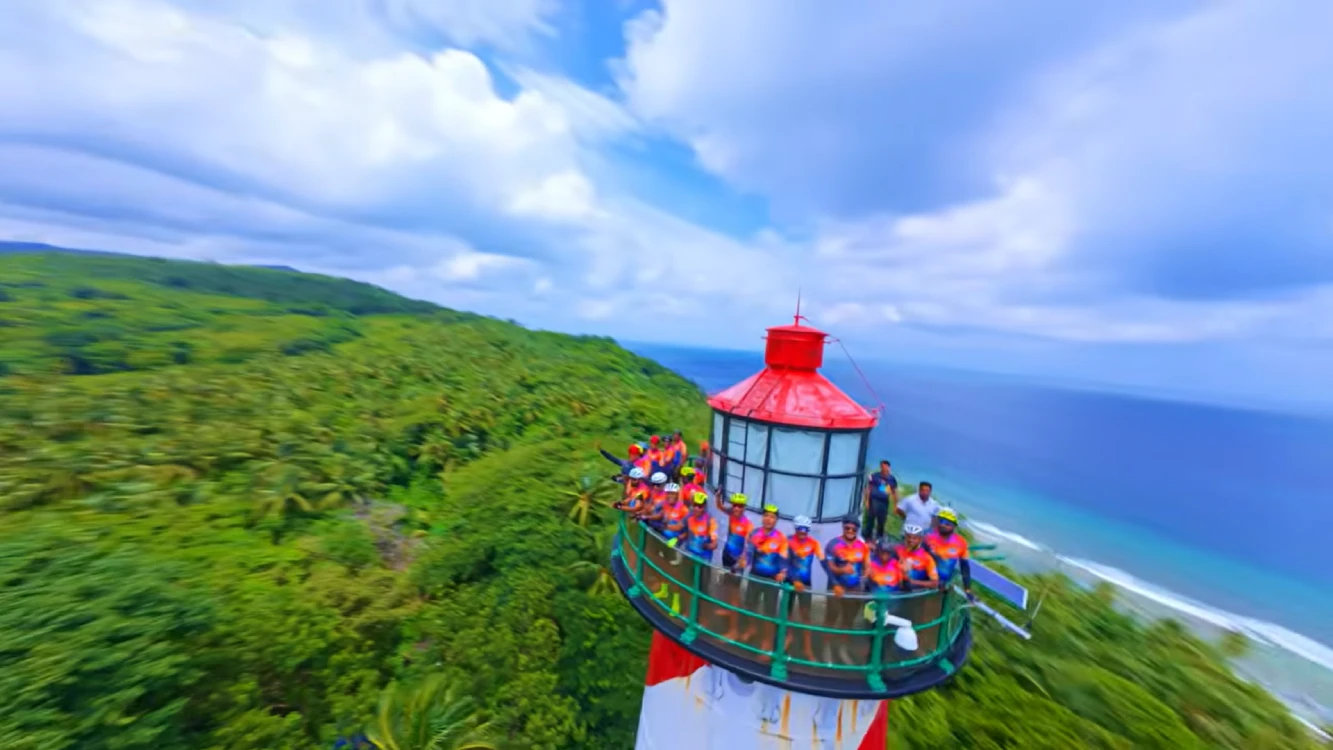
We also trekked to the historic North Bay Lighthouse, a landmark overlooking the surrounding waters. From this vantage point, the relationship between the islands, the sea and the navigational routes becomes particularly striking.
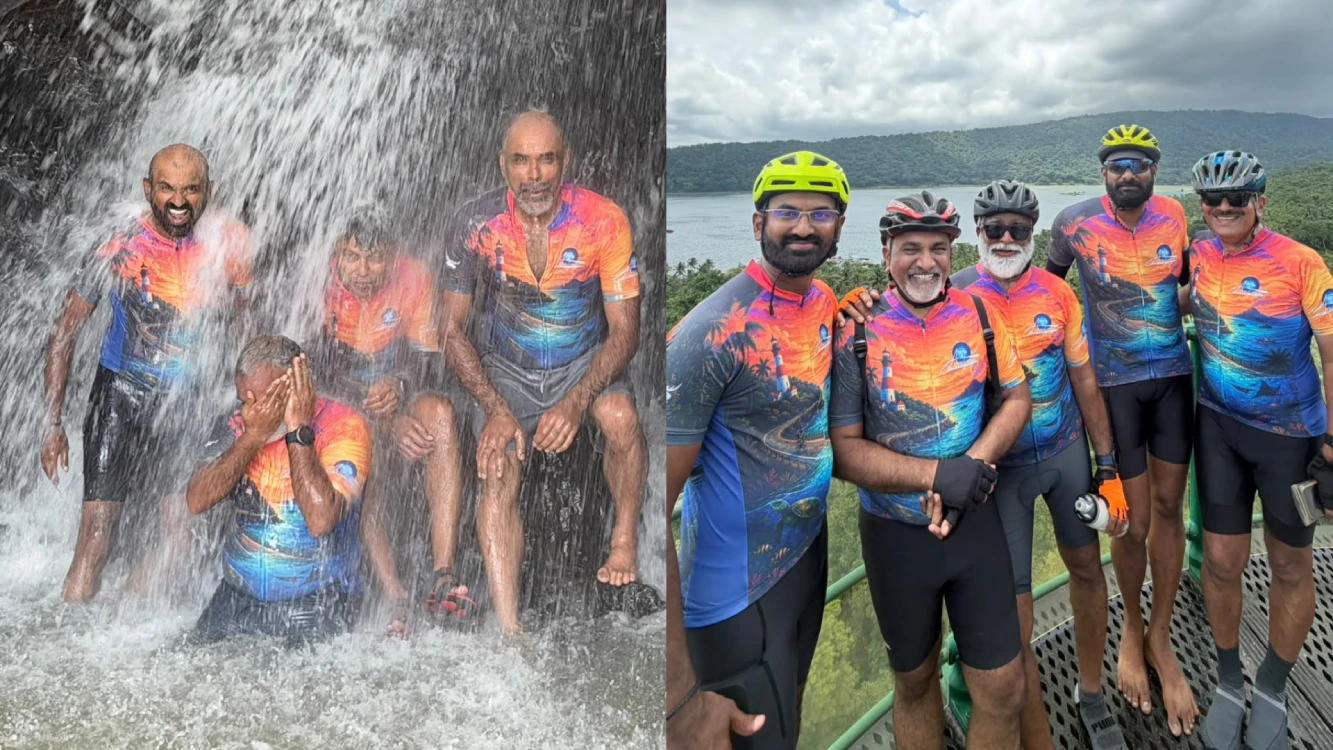
After the climb, the ferry crossing and the walk to the lighthouse, we stopped for lunch near a waterfall, enjoying a well-earned opportunity to relax and replenish our energy before continuing our journey.
The Unpredictable Andaman Weather
One of the most memorable aspects of the day was the weather itself.
The Andamans have a tropical maritime climate. High humidity and frequent monsoon rainfall are characteristic of the region. Showers can arrive suddenly, continue for a while and disappear just as unexpectedly. At times, the weather seems to change every few minutes.
We experienced exactly that.
Even while it was raining, we continued to sweat profusely because of the humidity. Wearing raincoats trapped additional heat and made cycling uncomfortable. What initially seemed like sensible protection from the rain soon became an obstacle to enjoying the ride.
Many of us who had worn raincoats at the beginning gradually removed them and continued cycling in the rain.
It was an interesting lesson in adapting to our surroundings. On the mainland, we might instinctively try to protect ourselves from every drop of rain. In the humid environment of the Andamans, however, staying comfortable sometimes meant accepting the rain rather than fighting it.
We slowly learnt to accept the weather as part of the adventure rather than treating it as an inconvenience.
Lessons Beyond the Kilometres
By the end of the day’s adventure, we had covered approximately 53 kilometres, with around 850 metres of elevation gain. For some, it was a demanding physical workout; for others, it was a test of patience and determination. For all of us, it was an introduction to the unique challenges of cycling in the Andamans.
What I enjoyed most was the combination of experiences packed into a single day — history at Cellular Jail, the physical challenge of Mount Harriet, the thrill of a ferry crossing, the coastal beauty of North Bay and the refreshing experience of riding through tropical rain.
Day 2 was not merely about completing 53 kilometres. It was about embracing the unfamiliar, adapting to nature and discovering the joy of earning every kilometre.
One island, one climb and one pedal stroke at a time — the adventure continued.
Day 3: Port Blair to Jirkatang, Baratang and Rangat
Distance: 50 km | 21st Sep 2026
Into the Heart of the Andaman Rainforests
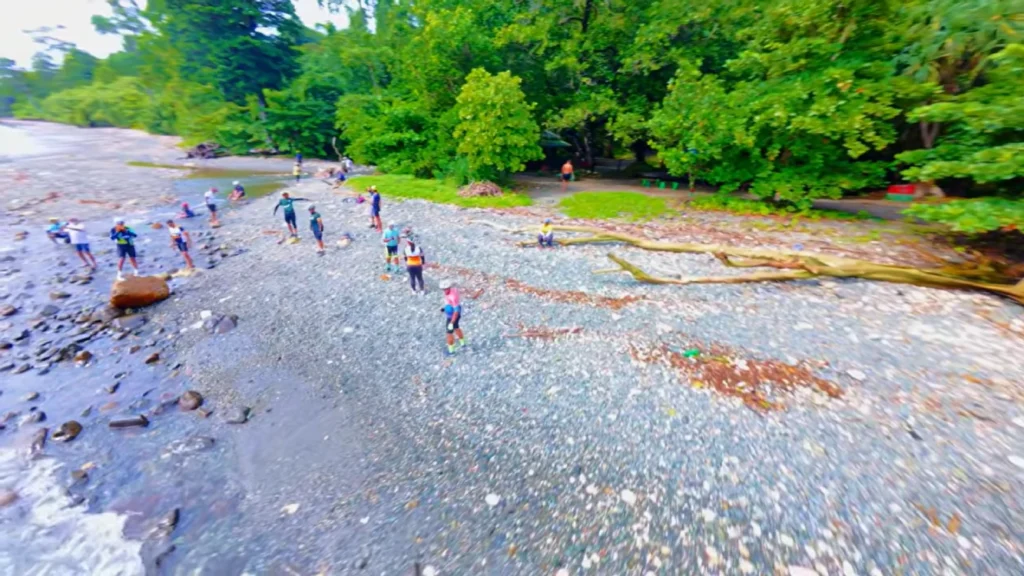
Day 3 took us into one of the most fascinating and sensitive landscapes of the Andaman Islands. We started early from Port Blair, riding through lush tropical greenery and stopping at a couple of shallow beaches along the way. The natural beauty was captivating, with dense forests, fresh air and glimpses of the sea accompanying us throughout the journey.
By lunchtime, we reached Jirkatang, the gateway to the Jarawa Tribal Reserve. From here, our journey took an unusual turn.
Through the Land of the Jarawa
Cycling through the Jarawa Reserve was not permitted as part of our expedition. We loaded our bicycles onto a truck and proceeded through the protected forest in a regulated convoy.
The Jarawa are one of the indigenous communities of the Andaman Islands who have maintained a largely independent way of life, with limited contact with the outside world. Their territory is protected, and outsiders must respect the restrictions governing access to their land.
We were briefed on the importance of maintaining distance. We were also instructed not to approach, photograph or interact with the community. These safeguards are essential to protect their privacy, health and right to live according to their own choices. Limited contact is particularly important because outside diseases can pose serious risks to isolated indigenous populations.
As we travelled through the reserve, I was struck by the vast stretches of tropical rainforest. The dense vegetation seemed to preserve a world of its own, largely untouched by the pressures of urbanisation and modern development.
The Andaman and Nicobar Islands are home to several distinct indigenous communities, including the Great Andamanese, Jarawa, Onge, Sentinelese, Shompen and Nicobarese. Each has its own history, culture and relationship with its environment. Much about some of these communities remains little known to the wider world.
The experience made me realise that the world still contains ways of life very different from our own — and that not every community needs to follow the same path of development.
By sunset, we reached Rangat, a peaceful town in Middle Andaman, where we checked into our hotel and relaxed after an unusual and memorable day.
Between Two Worlds–A Reflection
That night, I found myself caught between two contrasting emotions.
On one hand, I admired these communities for preserving their identity, traditions and connection with nature in a rapidly modernising world. While much of humanity is caught in the race for material comforts, they continue to live with a different relationship to their surroundings.
On the other hand, I wondered about the healthcare, education, scientific knowledge and other opportunities that modern society has developed. It made me question whether they were fortunate to be free from many complexities of modern life, or whether they were missing benefits that could improve human well-being.
Our journey through the Jarawa Reserve was more than a passage through a forest. It was an encounter with a difficult question about civilisation, development and human freedom.
A strange yet fascinating thought…
If people living on a remote island, despite being easily accessible to the rest of us, can remain unaware of what is happening beyond their own territory, then it is entirely possible that we too, may be unaware of what exists beyond our planet.
The universe is vast, mysterious and filled with countless possibilities. At any moment, we could encounter an astonishing discovery, perhaps even evidence of intelligent life far more advanced than our own, somewhere in the depths of space.
The thought is both humbling and thrilling: we may not be alone, and the greatest surprises in existence could still be waiting to reveal themselves.
The greatest sign of civilisation may not be our ability to change the lives of others, but our wisdom to respect their choices.
Day 3 left me with more questions than answers — and sometimes, those are the most valuable souvenirs a journey can offer.
Day 4: Rangat to Mayabunder | Riding Through Rain, Mangroves and Cultures
Distance: 60 km | 22nd Sep 2026
Riding with the Rain
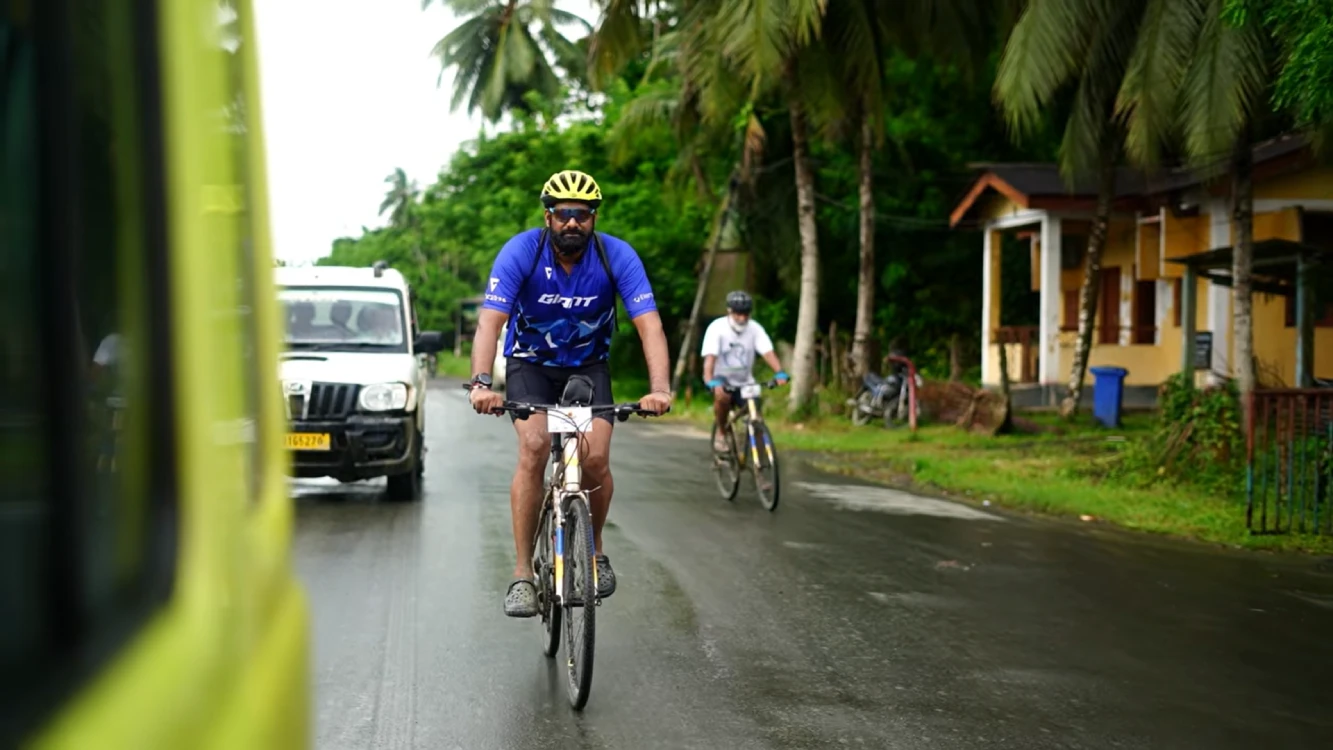
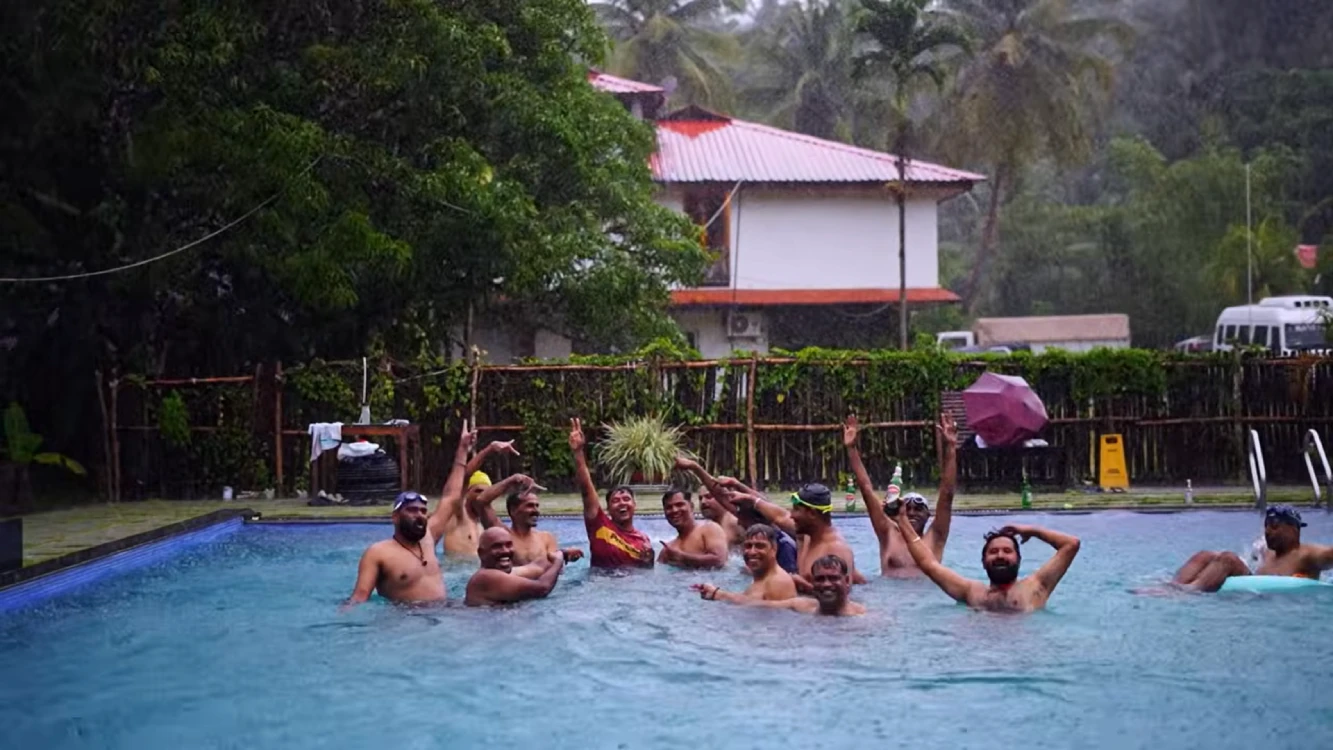
After a night of continuous rain, we started our journey from Rangat after breakfast, with the showers showing no signs of stopping. By now, we had learnt an important lesson from the Andaman weather — there was little point in waiting for the rain to stop. We simply had to adapt and keep riding.
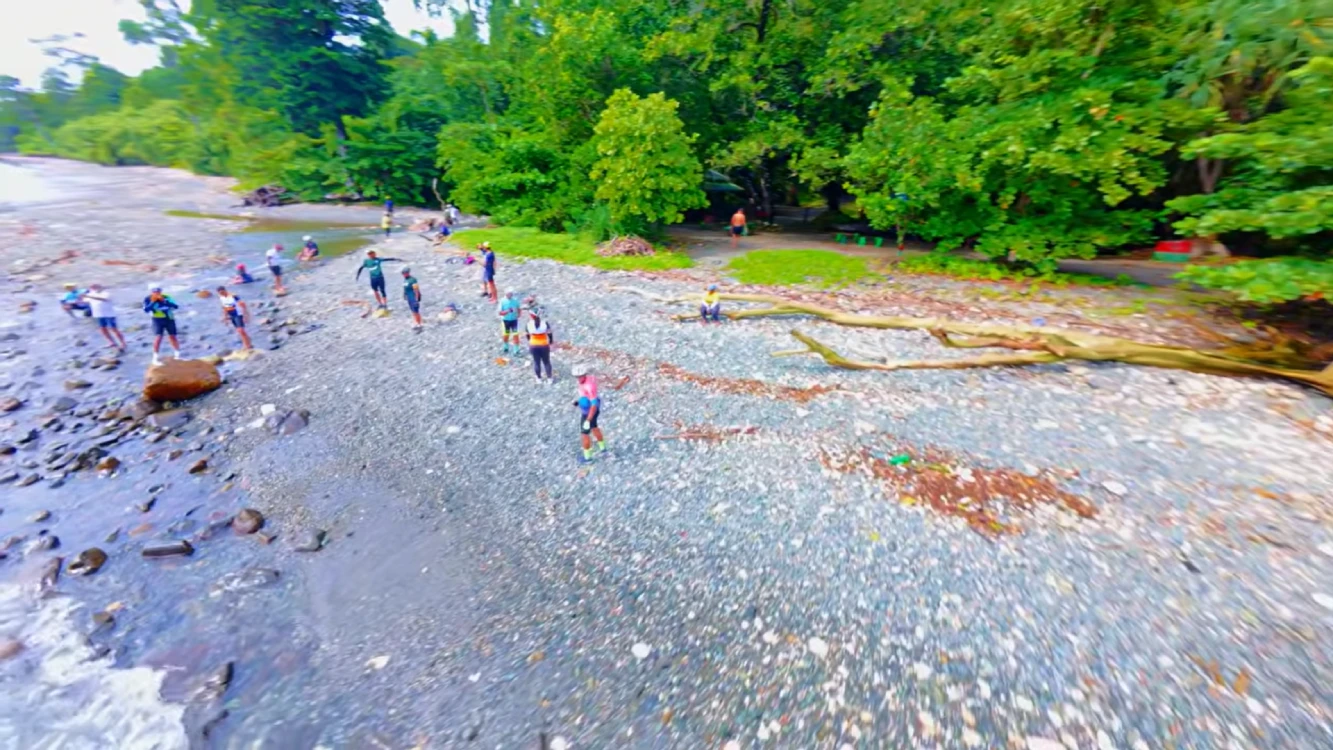
Our first stop was Morsedera, a beautiful coastal spot where freshwater streams flow towards the sea. The surroundings were refreshing, and some of our fellow riders couldn’t resist jumping into the stream to enjoy the water and the natural setting. It was a delightful break before we continued our journey.
Walking Through a Green Wonderland
Our next stop was the Dhani Nallah Mangrove Walkway, one of the fascinating natural attractions of Middle Andaman. We walked nearly two kilometres through the mangrove forest, surrounded by dense greenery, tangled roots and the sounds of nature.
The wilderness gave us a feeling of being deep inside an Amazon-like rainforest. Mangroves are extraordinary ecosystems, protecting coastlines from erosion, providing breeding grounds for marine life and supporting a rich variety of biodiversity. Walking through this natural corridor was a reminder of how much these coastal forests contribute to the ecological balance of the islands.
The walk also offered wonderful opportunities for photographs and memorable moments with fellow cyclists.
A Tough Ride to Mayabunder
The cycling conditions became more challenging as we continued towards Mayabunder. Persistent rain had damaged several stretches of road, leaving us to negotiate potholes, muddy patches and slippery surfaces.
It was a test of patience, balance and concentration. The beautiful surroundings kept our spirits high, but the difficult road conditions demanded constant attention.
Fortunately, all our riders reached Mayabunder safely. After 60 kilometres of cycling, the day’s physical challenge was behind us. But an even more memorable experience awaited us that evening.
A Night with the Karen Community
We stayed at a homestay hosted by the Karen community in Webi, Mayabunder. This was not merely an overnight stop; it became one of the most meaningful cultural experiences of our expedition.
The Karen people trace their origins to Myanmar. During British rule, Karen families were brought to the Andaman Islands in the 1920s to work in forestry. Many families chose to remain here after independence and gradually built their lives in these islands, preserving their distinct cultural identity while becoming part of the wider Indian community.
Many Karen families practise Baptist Christianity. They maintain their cultural traditions and community bonds, while using languages such as Hindi and English to communicate beyond their homes. Their journey reflects the fascinating cultural diversity found within the Andaman Islands.
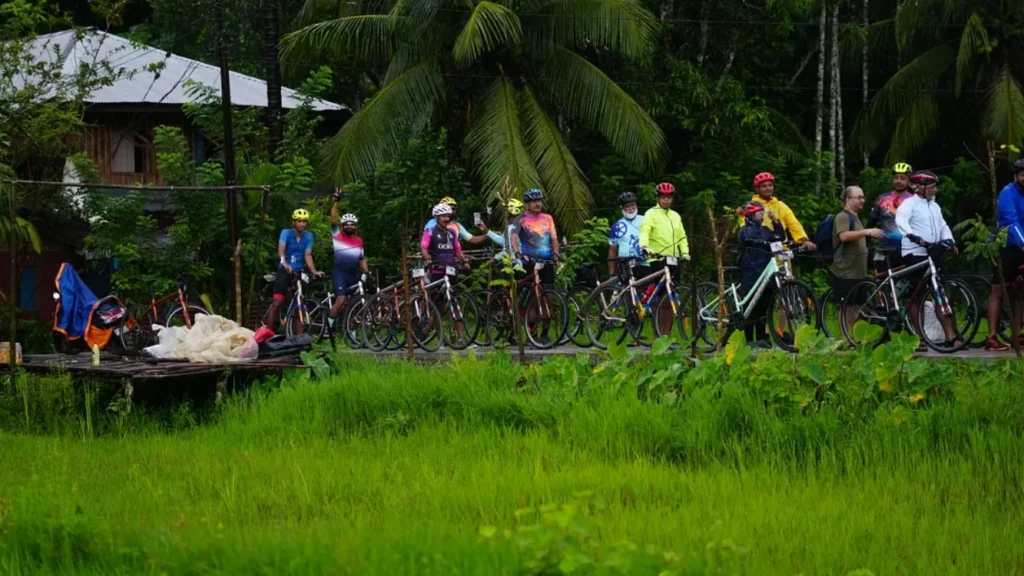
Hospitality That Touched Our Hearts
Our host, Mr John, welcomed us warmly. After dinner, he shared the story of his community, their migration, struggles, settlement and way of life.
What impressed me most was the simplicity and warmth of their hospitality. John and his wife had personally prepared the food for our group, including a couple of their traditional delicacies. It was heartwarming to see them take so much care in making their guests feel comfortable.
John also explained how Karen families support one another in their everyday lives. Their close-knit relationships, mutual help and frequent social gatherings keep the community connected across generations.
Listening to him, I realised that a community’s richness cannot be measured merely by its wealth or material possessions. Strong relationships, a sense of belonging and the willingness to stand by one another are equally valuable forms of wealth.
Outside, the rain continued through the night and into the following morning. Inside, however, the warmth of our hosts made the evening memorable.
The Real Souvenirs of Travel
Day 4 was a beautiful blend of adventure and human connection. We rode through rain-soaked landscapes, explored a mangrove forest, negotiated difficult roads and discovered the story of a community that has made the Andamans its home.
We travel to discover new places, but it is often the people we meet who leave the deepest impressions on our hearts.
The Karen family’s warmth reminded me that hospitality does not depend on grand arrangements or material comforts. It comes from the heart, through the food we share, the stories we exchange and the kindness we extend to strangers.
Long after the rain, the muddy roads and the photographs fade from memory, I am sure this evening with John and his family will remain with us.
Day 5: Mayabunder to Diglipur
Distance: 92 km | 23rd Sep 2026
A Long Ride Through the Heart of the Andamans
Day 5 was our longest cycling day, with 92 kilometres to cover from Mayabunder to Diglipur, in North Andaman. After the previous day’s struggle through muddy roads and potholes, we were happy to find that the road conditions were considerably better.
After breakfast, we set off with renewed energy, ready to take on the longest stretch of our expedition so far.
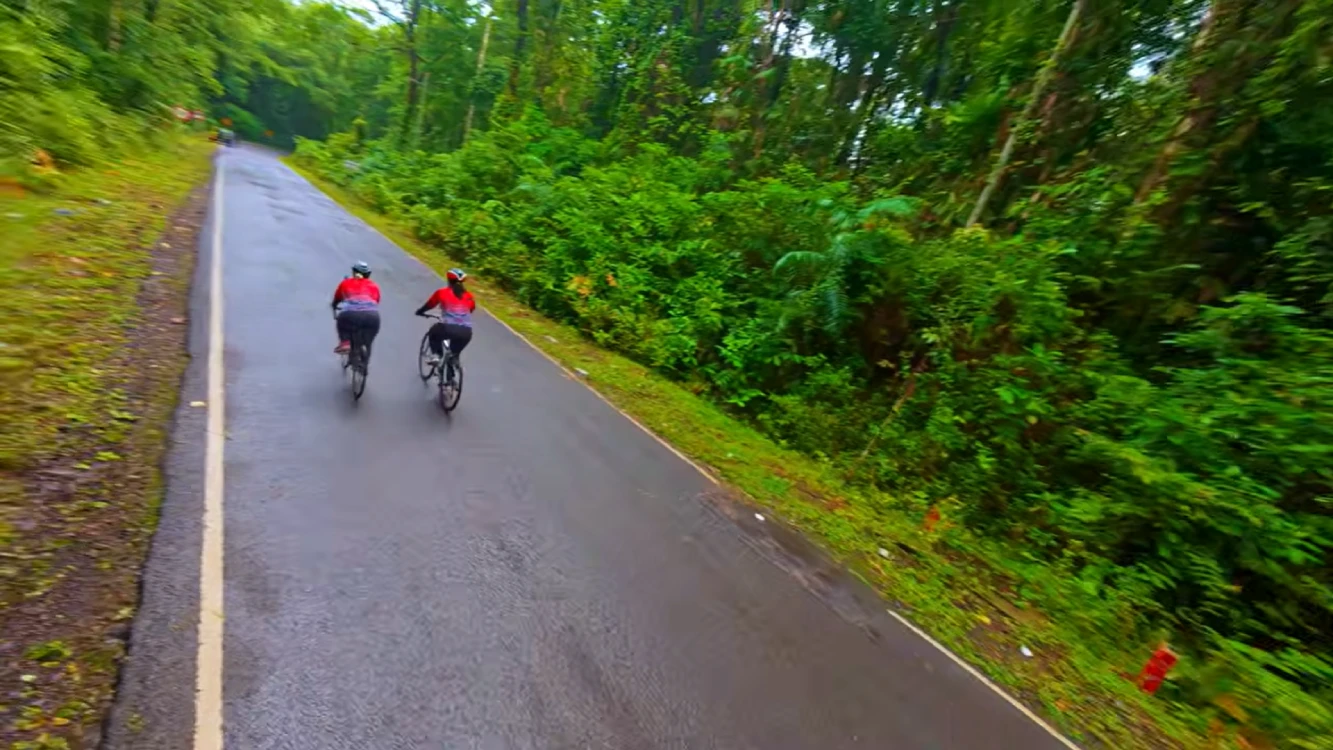
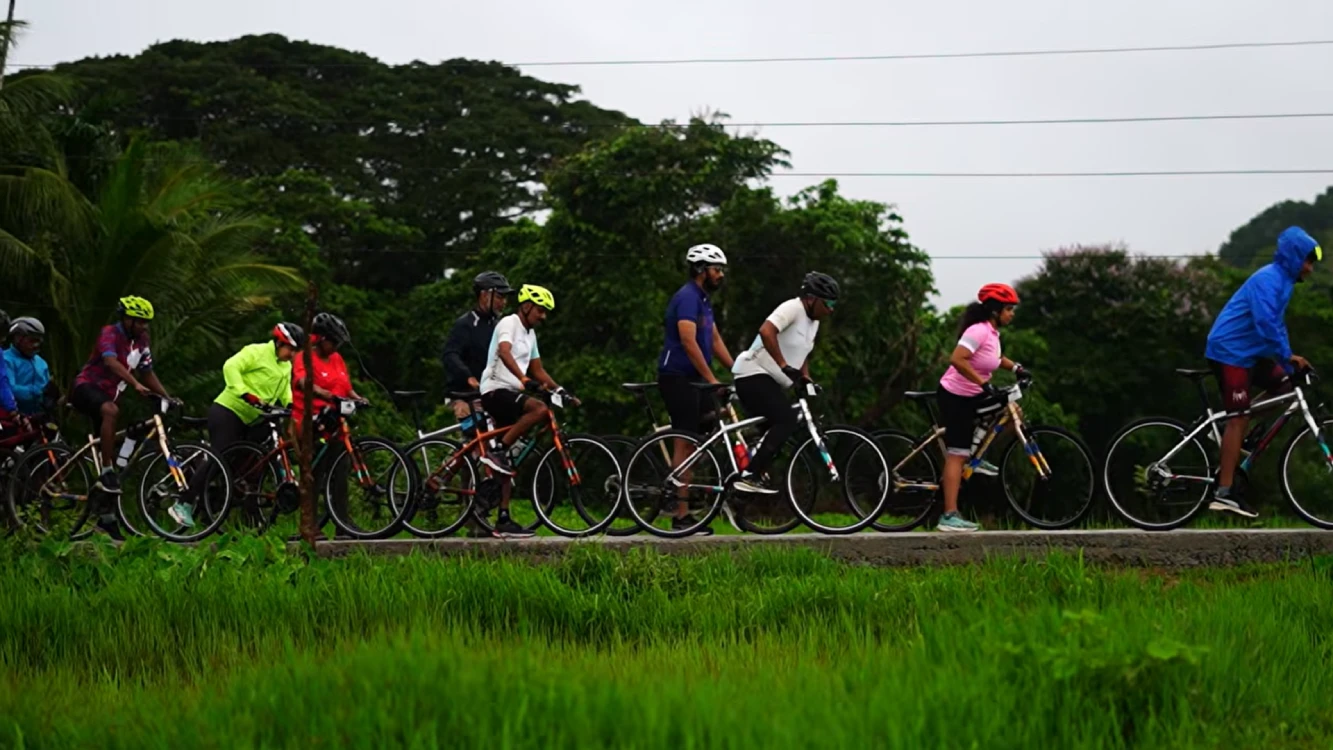
The route followed the legendary Andaman Trunk Road, passing through dense tropical forests, remote villages and stretches of coconut plantations. The landscape offered a fascinating glimpse into island life, far removed from the noise and pace of mainland cities.
Cycling through these forested stretches was a unique experience. The lush greenery, occasional village settlements and the sheer expanse of nature made us feel as though we were travelling through a world of its own.
The Rain Was Our Constant Companion
By now, the unpredictable Andaman weather had become part of our daily routine. We were drenched by rain, dried out as the showers stopped, and soaked again when the next spell arrived!
Rather than getting frustrated, we had learnt to accept the weather as another member of our cycling group. The experience taught us to adapt, stay cheerful and keep moving, whatever the conditions.
One of the notable landmarks on our route was Austin Creek Bridge, which carries the Andaman Trunk Road across the creek. The crossing offered another memorable moment on our journey through North Andaman’s forested terrain.
Kilometre after kilometre, we continued pedalling towards Diglipur, drawing on our endurance and the encouragement of our fellow riders.
Finally, Diglipur
By evening, we reached our destination Diglipur, one of the northernmost towns of the Andaman Islands, known for its natural surroundings and access to attractions such as Saddle Peak, Ross and Smith Islands, and the beaches of North Andaman.
Our stay was arranged at Pristine Beach Resort near Kalipur Beach. After covering 92 kilometres, reaching the finish point brought an enormous sense of relief and accomplishment.
There was a special excitement among the riders. We congratulated one another, exchanged smiles, posed for photographs with our cycling buddies and finally settled into our rooms.
The feeling was difficult to describe. We had ridden through remote forests, crossed creeks, encountered unfamiliar cultures and endured repeated spells of rain. Each day had revealed a different side of the Andamans, and together, these experiences had taken us far beyond an ordinary cycling holiday.
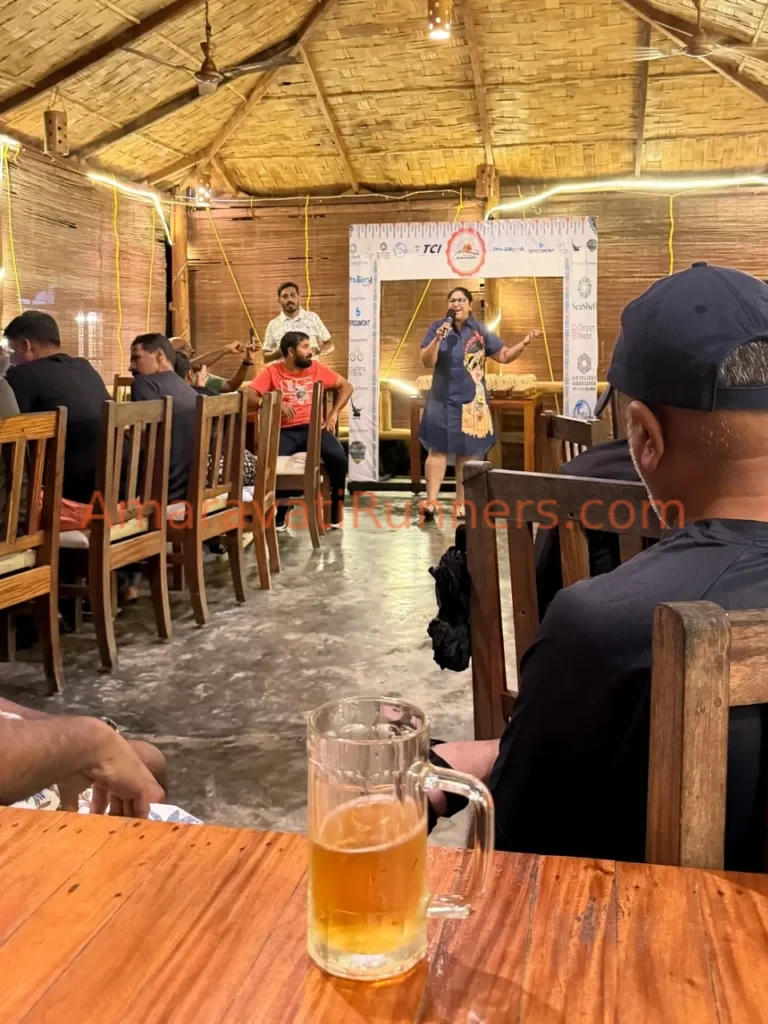
An Evening of Celebration and Memories
During dinner, our organiser presented mementos and certificates to the participants in recognition of their involvement in the expedition. A few fellow cyclists shared their experiences, recalling the challenging climbs, beautiful landscapes, unpredictable weather and camaraderie that had made the journey special.
Listening to everyone’s stories, I realised that although we had travelled the same route, each of us had experienced the expedition differently. For some, the highlight was conquering a difficult climb; for others, it was discovering a new culture or simply enjoying the freedom of riding through nature.
Yet we all shared one common feeling, the satisfaction of having accomplished something special together.
More Than 92 Kilometres
At my age, I increasingly value journeys that challenge the body while enriching the mind. Cycling 92 kilometres in unpredictable weather is certainly a physical achievement, but the real reward lies in everything that happens along the way.
The friendships, the shared struggles, the laughter after a difficult stretch and the satisfaction of reaching a destination together are what make such adventures unforgettable.
Sometimes, the greatest distance we travel is not measured in kilometres, but in the experiences that change the way we see the world.
Day 5 was our longest ride, but it also brought us a profound sense of achievement. We had explored another part of the Andamans, pushed our limits and strengthened our bonds as a group.
Day 6: Ross & Smith Islands and an Unforgettable Overnight Voyage
24th Sep 2026
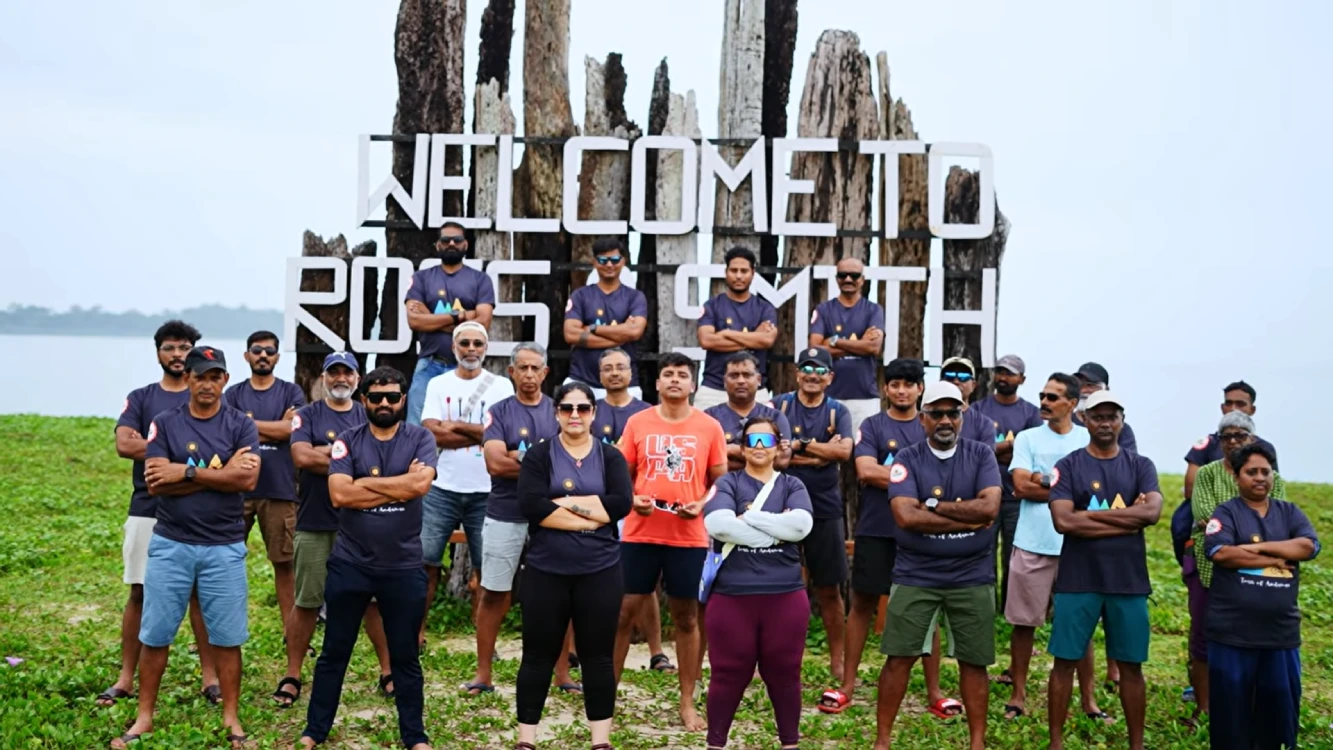
Our cycling expedition across the Andaman Islands had come to an end, but one last beautiful destination awaited us before we began our return journey to Port Blair, the enchanting Ross & Smith Islands.
We took a small boat to reach these picturesque islands, known for their unique natural beauty. Ross and Smith are two separate islands connected by a narrow stretch of white sand, forming a natural sandbar that becomes visible during low tide. Walking across this sandy bridge, with turquoise waters on either side, is an experience that beautifully showcases nature’s creativity.
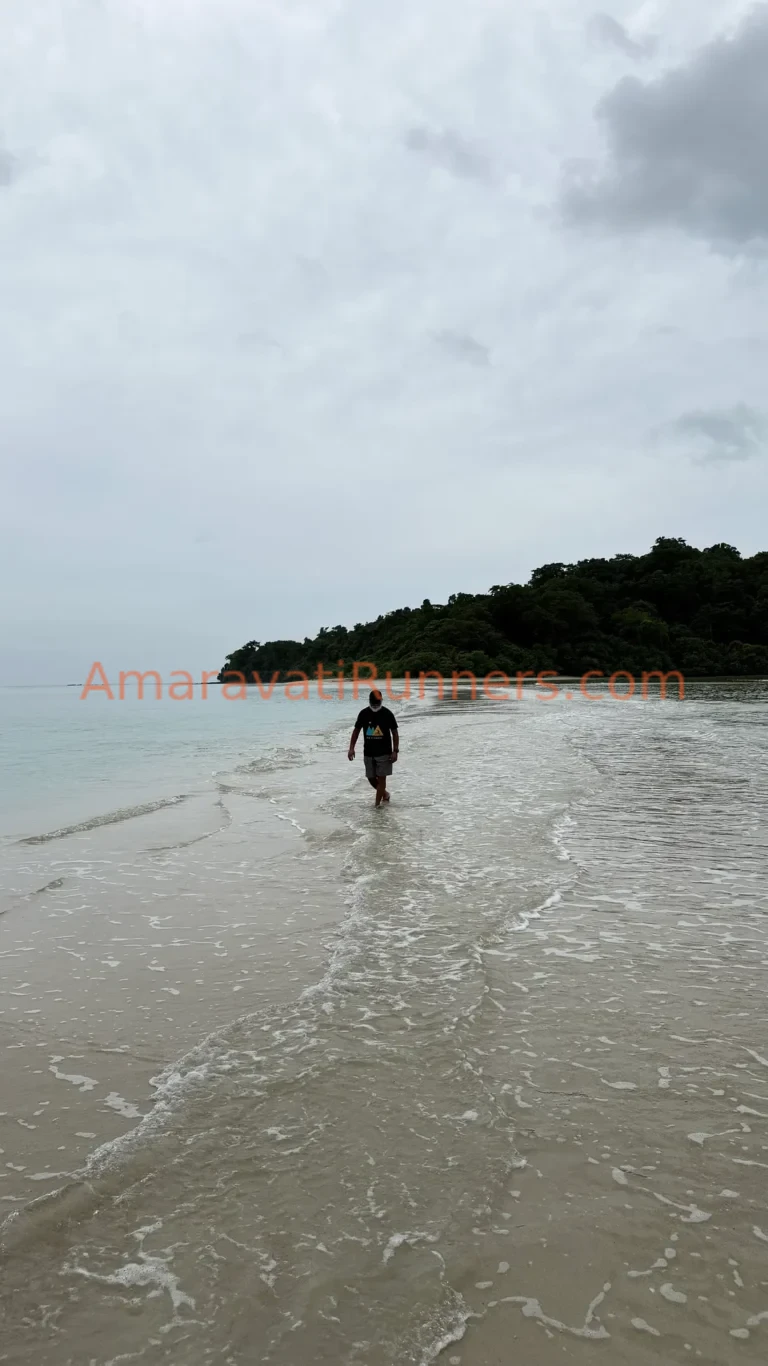
We spent a couple of peaceful hours enjoying the scenery, taking photographs and creating memories of this remarkable destination. After bidding farewell to these beautiful islands, we returned to prepare for the next phase of our journey, an overnight voyage back to Port Blair.
MV Sentinel - An Overnight Voyage That Tested Our Patience
After lunch, we boarded the ship called MV Sentinel. It was an ageing passenger vessel that had served the island communities for five or six decades. Some of our teammates were allotted cabins, while others had to manage with bunk beds on the lower decks.
Unfortunately, the weather was extremely hot, and the air-conditioning system was not working. The lower bunk areas were particularly uncomfortable, with virtually no ventilation. Being deep inside the vessel, these spaces felt stuffy and suffocating. Even the cabins offered little relief from the heat, though their windows provided a small consolation, a view of the endless sea.
Our teammates were understandably frustrated. After several days of cycling through forests, coastal roads and remote villages, this was certainly not the kind of comfort we had hoped for.
Fortunately, there were no restrictions on moving around the ship, and almost everyone eventually made their way to the open deck. The weather was still hot, but the sea breeze made it far more bearable than the conditions below. The deck became our refuge, offering fresh air, open skies and an uninterrupted view of the sea.
A Special Interaction with the Captain
One of the memorable moments of the voyage was our interaction with the captain. He was extremely courteous and welcomed us into the cockpit, where he explained the vessel’s various features and shared insights into its operations.
He spoke about the ship’s long service history, spanning nearly five or six decades, and its vital role in connecting communities scattered across these remote islands.
What touched me most was his sadness at the thought that the vessel would soon be declared unfit for service and dismantled. Listening to him, I could sense that this was more than just a vessel to him. It was a part of his professional life, carrying decades of memories, experiences and service. For someone who had spent so much time on board, saying goodbye to the ship must have been an emotional experience.
The interaction reminded us how essential ships are to the people of the Andaman Islands. They are more than a means of transportation. They connect remote communities to healthcare, education, essential supplies and the outside world.
What feels like an uncomfortable journey for a tourist may be an indispensable part of everyday life for an islander.
A Night Under the Open Sky
After dinner on board, most of us chose to remain on the deck rather than return to our hot cabins and uncomfortable bunk beds. Some managed to sleep in the open air, while others spent much of the night watching the sea.
The ship sailed along the coastline, stopping at Rangat for about half an hour before continuing its journey.
I could hardly sleep. The heat and discomfort were partly responsible, but there was something else keeping me awake, a mind occupied with thoughts that had followed me throughout this expedition.
My thoughts kept returning to the indigenous tribal communities of the Andaman Islands. Even as I gazed at the dark sea, I found myself reflecting on their history, their traditions, their isolation and their relationship with the modern world.
I had no easy answers. Perhaps the purpose of travel is not always to find answers, but to awaken questions we had never thought deeply about before.
And so, while the ship continued its journey through the darkness, my thoughts continued their own voyage.
Sixteen Hours at Sea — A Lesson in Perspective
Our voyage lasted nearly 16 hours. It was certainly not comfortable for most of us. We had expected a scenic journey across the sea, but instead encountered unbearable heat, inadequate ventilation and a sleepless night that tested our patience.
Life in the Andaman Islands is shaped by geography, distance, weather and the availability of infrastructure. For many communities, travelling by sea is not an adventure or a holiday experience; it is a necessity. The challenges we encountered for one night may be familiar realities for people who depend on these services in their everyday lives.
We were uncomfortable because we had temporarily lost our comforts. Many others have learnt to live their lives without ever having access to them.
That thought brought a sense of humility.
We often take modern conveniences for granted. Air-conditioning, comfortable beds, quick transportation and easy access to essential services have become such an integral part of our lives that even a brief absence can frustrate us. A little discomfort can make us forget the beauty of the surroundings and the privilege of the experiences we are fortunate enough to enjoy.
As our ship sailed through the darkness towards Port Blair, I realised that this expedition had given me much more than cycling miles, beautiful landscapes and photographs. It had offered me opportunities to observe different ways of life, question my own assumptions and reflect on the meaning of progress, comfort and contentment.
The cycling journey was over, but the journey within me was far from over.
Day 7: Returning Home, Carrying Tons of Memories
25th Sep 2026
Back to Port Blair
We reached Port Blair at 8 AM, bringing our overnight sea voyage to an end. Organiser had arranged a hotel for us. A refreshing bath after the long and strenuous journey felt like a blessing. We had breakfast, packed our belongings and prepared to return to our routine lives.
Roads Travelled, Challenges Overcome
Over the past seven days, I had pedalled through roads less travelled, remote villages that rarely witnessed cyclists, pothole-filled stretches, dense rainforests and unfamiliar landscapes. Every turn brought a new sight, every road presented a challenge, and every destination offered a different perspective on life.
The Journey Within
While my legs were pedalling through the islands, my mind was pedalling through my life.
I pedalled through my childhood memories, revisited the different phases of my life, travelled through my emotions and reflected on my relationships. I explored thoughts that had remained buried beneath the routines and responsibilities of everyday living. I questioned some of my assumptions, rediscovered a few forgotten feelings and looked at my own life from a different perspective.
The physical journey challenged my endurance, but the inner journey challenged my understanding of myself.
Lessons from the Islands
Andaman gave me opportunities to encounter unfamiliar communities, appreciate different cultures, make new friends and experience nature in its many forms. It also left me with questions about human relationships, progress, simplicity and our connection with the world around us.
There were moments of excitement, stretches of exhaustion, unexpected discomforts and experiences that tested my patience. Yet, each one became part of the adventure. Not everything went according to our expectations, and perhaps that was one of the most valuable aspects of the journey.
Travel That Transforms Us
Travel allows us to see new places and discover new dimensions of ourselves.
This expedition taught me that it is not merely about covering distances or ticking destinations off a list. It is about stepping outside our familiar surroundings, allowing ourselves to be challenged, learning things we never knew, and unlearning things we assumed we knew.
It is about meeting people whose lives are different from ours and realising how much we still have to understand.
Returning Home, Changed Within
Finally, I reached the airport with my luggage in hand and a thousand memories in my mind, ready to board the flight back to my hometown.
One thing I have come to believe: every journey outside has the potential to upgrade the person within.
We may return to the same home, the same people and the same routine, but we need not return as the same person.
The Andaman expedition has ended, but its lessons will continue to travel with me.
Until the next adventure, the next unfamiliar road and the next opportunity to discover something new, about the world and about myself,
Goodbye, Andamans. Thank you for the roads, the people, the experiences and above all, the journey within.
My Heartfelt Gratitude
My heartfelt gratitude to everyone who made this journey special. ❤️
🙏 Thanks to the organisers Mr Dhiraj, Parikrama and his wonderful team, for making it happen just the way I envisioned it.
🚴 Thanks to my fellow riders for standing by me and offering their support whenever I needed it.
❤️ Thanks to my family for giving me the freedom to live life on my own terms and pursue my dreams without hesitation.
🤝 Thanks to my friends for constantly motivating me through their admiration and kind words always.
💚 And above all, thanks to my Amaravati Runners family for their boundless trust in me and for always supporting me with all their heart.
Life becomes truly beautiful when we have people who believe in our dreams, support our journeys, and celebrate our spirit. I feel blessed to have you all in my life.
See you soon on my next adventure🚴♂️🌿🌊
Tour of Andaman Edition 6 | Where Every Road Tells a Story
Gallery | Tour of Andaman Edition 6